Three Montana Ghost Town Road Trips
The leaves are turning from green to orange, and the morning temperatures are dropping just enough to see your frosty breath. The intensely colorful change of seasons in Montana’s Rocky Mountains is legendary and October serves up the perfect blend of autumn chill and Spooky Season atmosphere to beckon you to take a Ghost Town Road Trip.
There is something about an abandoned building that invites the imagination to wander and wonder... Who lived here? What did they dream about? Why did they leave? And, perhaps most intriguing of all, did everyone truly leave or do remnants and shadows of their lives in these eerily abandoned towns remain…
Montana’s mining history created many Ghost Towns when gold and copper discoveries brought thousands of people into the territory and towns popped up literally overnight. Some became thriving cities, while others faded as the mines played out and their residents moved on. What remains is a collection of historic buildings, forgotten streets, and stories that continue to be told generations later.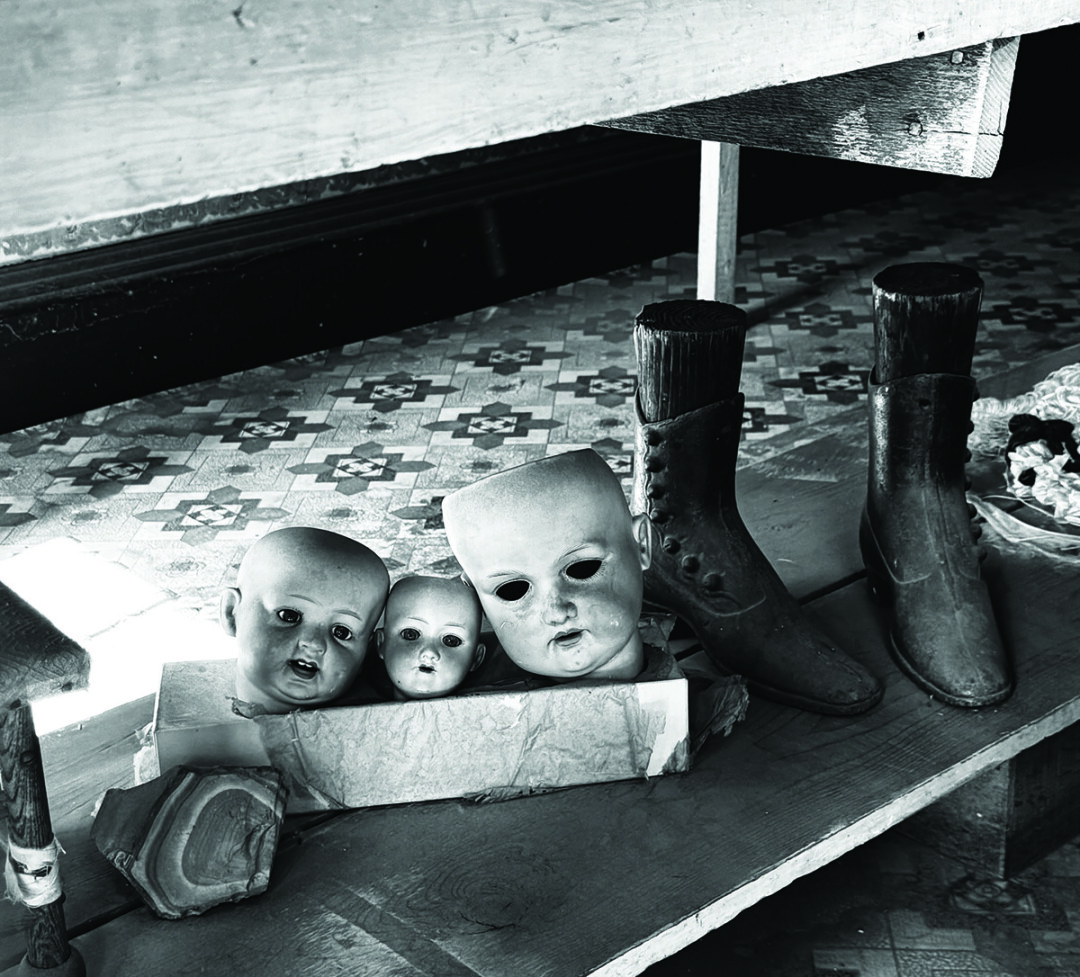
Bannack, MT
Bozeman to Bannack: 133 miles
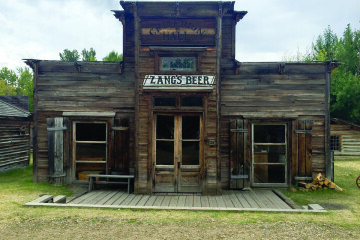
Bannack is THE quintessential Montana ghost town. Located southwest of Dillon, this state park preserves more than 50 historic structures along Grasshopper Creek. Its weathered buildings and quiet streets make it easy to imagine the town during its nineteenth century heyday.
Gold was discovered here in 1862, and the settlement quickly attracted prospectors hoping to strike it rich. Bannack became Montana’s first territorial capital in 1864, although that distinction was short lived. As gold discoveries drew people elsewhere, the town gradually declined, eventually leaving behind the preserved community visitors can explore today.
One of Bannack’s most infamous historical figures is Sheriff Henry Plummer. Accused of leading a gang of road agents responsible for robberies and murders, Plummer was hanged by the notorious Montana Vigilantes in Bannack in January 1864 on gallows that, ironically, Plummer had built himself when he served as sheriff.
The old jail, the gallows site, Hotel Meade and other buildings associated with Bannack’s early days provide plenty of material for ghost stories. Visitors have reported unexplained sounds, unusual sensations, and apparitions, including the frequently repeated visitations of a young female spirit known as Dorothy. These stories are part of the town’s folklore and certainly add a chilling atmosphere to an October visit. Elies Adams, founder of Bozeman Paranormal, tells of a spooky encounter with Dorothy during a paranormal investigation: “The Meade was my first ever EVP capture that I was able to get of Dorothy. She said, ‘We’re here forever.’ The saloon is where I witnessed a door close by itself. Our group also got an affirmative knocking response from Henry Plummer when we asked if he wanted to stay and play Texas Hold ‘Em with us.”
For those who prefer their history with a theatrical chill, Bannack hosts annual Ghost Walks featuring costumed performers who bring stories from the town’s past to life.
Road trip tip: Allow plenty of time for the drive and exploration. Bannack is a state park with seasonal hours, so check the current schedule before leaving Bozeman. Bring layers, sturdy walking shoes, and snacks, as services are limited in the immediate area.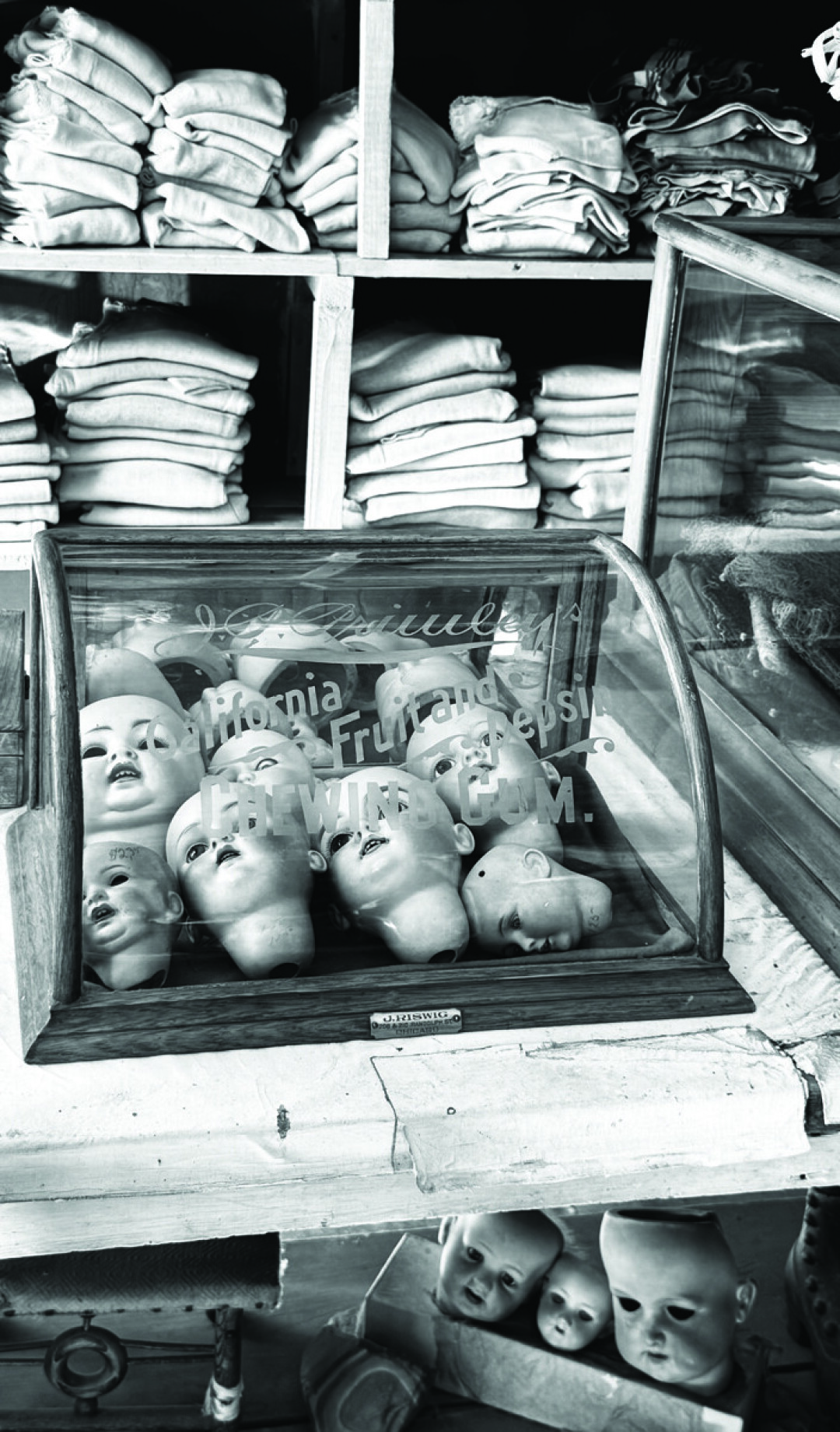
Virginia City, MT
Bozeman to Virginia City: 67 miles
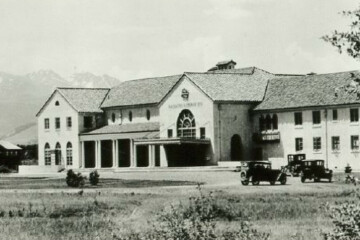
If Bannack is the quiet ghost town, Virginia City is its lively cousin who refuses to let the nineteenth century end. Founded in 1863 following the discovery of gold in Alder Gulch, Virginia City rapidly became one of the most important settlements in Montana Territory. It served as the territorial capital from 1865 until 1875 and remains one of the West’s most preserved historic communities.
Today, the town’s wooden boardwalks, false front storefronts, historic hotels, and old-fashioned businesses create an atmosphere that feels removed from modern life. Visitors can wander past buildings that have stood for generations, browse antique shops, and explore the history of a community that once attracted miners, merchants, entertainers, and fortune seekers from across the country.
Virginia City’s ghost stories are as much a part of its identity as its gold rush history. Tales of unexplained footsteps, mysterious figures, and unusual activity have been associated with several historic buildings. The old hotels and saloons are particularly popular subjects. The Fairweather Inn, named for gold discoverer Bill Fairweather, is one of the town’s best known historic lodging establishments and has long been associated with stories of paranormal encounters. Other buildings, such as the historic Opera House have inspired their own accounts of lingering presences. Known for its rich theatrical history, entertainment was an important part of life in Virginia City and the community’s preserved theaters and performance traditions offer a reminder that the people who came West were interested in more than gold. They wanted music, laughter, drama, and a little diversion after a long day’s work. The idea of a ghost attending an encore seems entirely appropriate. If one eerie story about the Opera House is true, former acting troupes that have graced the stage reserved a special seat in the audience during performances, in the hopes that a certain ghostly presence would join them!
October brings a quieter pace after the summer tourist season. The surrounding hills are beautiful, the air is crisp, and the town’s historic character becomes even more pronounced when the crowds thin. It is an ideal destination for a leisurely afternoon of exploration, followed by dinner and perhaps a ghost tour if one is available.
Road trip tip: If you are interested in a particular haunted history experience, reserve ahead as many Virginia City businesses operate seasonally.
Butte, MT
Bozeman to Butte: 85 miles
Butte is not technically a ghost town, but it has enough ghosts, history, and atmospheric architecture to earn a place on this road trip. Once known as “The Richest Hill on Earth,” Butte grew into one of the world’s great mining cities, producing enormous quantities of copper and attracting immigrants from around the globe.
The historic uptown district is filled with reminders of its extraordinary past. Grand Victorian mansions stand not far from former boarding houses, saloons, theaters, and mining related buildings. The contrast between wealth and working-class life is visible throughout the city, offering a look at the people who built Butte.
One of the most impressive places to begin is the Copper King Mansion, the former home of mining magnate William A. Clark. Constructed between 1884 and 1888, the elaborate Victorian residence contains ornate woodwork, stained glass, and preserved architectural details. Today it operates as both a historic lodging property and a tour destination. The mansion has also developed a reputation for paranormal activity, with stories involving unexplained sounds and the possible presence of former residents. Its history and opulent interiors make it a worthwhile stop. It is easy to imagine the social gatherings, family dramas, and business conversations that once took place within its walls, especially in the top floor grand ballroom. Visitors have reported feeling a fleeting touch accompanied by a soft swooping sound, almost as though brushed by the elegant ball gowns of dancers of days gone by.
For a very different perspective on Butte’s past, consider the Dumas Brothel on East Mercury Street. Opened in 1890, the building operated as a brothel until 1982 and is now preserved as a historic site. Its history reflects the complicated social world of the mining city, including the lives of the women who worked there and the changing fortunes of Butte’s red-light district. The Dumas is also one of the city’s best known paranormal locations. Visitors and paranormal investigators have reported unusual sounds, apparitions, and other unexplained experiences. I tell in detail about my encounter with the Dumas’ past Madam in this Bozeman Magazine article from 2013. https://bozemanmagazine.com/articles/2013/09/30/100922-a-montana-ghost-story-from-the-dumas-brothel
Butte’s haunted reputation extends beyond the Copper King and the Dumas. The old St. James Hospital, Finlen Hotel, and numerous other Uptown Butte buildings have all been the subjects of ghost stories. Local ghost tour operators offer experiences that combine the city’s colorful history with accounts of its more mysterious residents.
Road trip tip: Butte offers more year-round services than the other two destinations, but individual historic attractions and ghost tours may have limited fall schedules. Book special tours in advance and check whether reservations are required for the Copper King Mansion.
A Little History, a Little Mystery
The beauty of a ghost town road trip is that it can be whatever you want it to be. You can spend the day studying Montana history, photographing old buildings, listening to local legends, or simply enjoying the scenery. You do not have to see a ghost to appreciate the sense of mystery that surrounds these three destinations.
Bannack offers the solitude of a long-abandoned gold rush settlement. Virginia City brings the territorial era to life through preservation. Butte reveals the grandeur and grit of Montana’s mining history, along with a collection of haunted landmarks. Whichever destination you choose, October is a wonderful time to explore—and if you happen to hear footsteps behind you on an empty boardwalk, perhaps it is only the wind.
Perhaps…