Storm Castle Cafe
From humble beginnings as a catering operation, a search for the right kitchen led Scott Peterson and Nicole Warner to a breakfast-and-lunch spot that quickly found its place in the Bozeman community. Since opening in 2010, Storm Castle Cafe has embraced the casual charm of an old-fashioned Montana diner, preserving a piece of old Bozeman while expanding its own Hilltop 7 Farm, where the family raises Red Angus cattle and hogs for the kitchen—and now, with the help of their son, Felix, for customers to take home. Their story is one of family, tradition, and agricultural roots that continue to shape what’s on the menu.
Angie Ripple: Tell us how Storm Castle Cafe came about.
Nicole Warner: My husband Scott is from here. He graduated from MSU and knew that he needed to go to culinary school if he wanted to do what he wanted to do here. He went to culinary school, did an internship in France, and worked in New York City and San Diego. He came back here, and worked as sous chef, and as executive chef around the Big Sky area; then opened Peterson Spirits & Eatery in Livingston. And when they sold that, we had two small kids, and Scott wanted to be home more in the evening with the kids, so we started catering. We found a catering kitchen at the old Castle Rock Cafe, and the deal was that we could lease it and cater if we did breakfast and lunch June through September, when the RV park is full. That seemed to fit right into our life, and we fell in love with the more casual, intimate atmosphere. When that situation was coming to an end, we found this space on Tai Lane and opened here in 2010; we rolled with the casual diner, breakfast and lunch atmosphere. The dream was always for Scott to get back to his family heritage of raising livestock and using those products in his culinary adventures. Hilltop 7 Farm has continued to grow, and we’ve incorporated it more and more into the items on the menu, and specials. We’ve grown the farm to a point where Felix and Scott are raising enough Red Angus and cycling hogs through the farm that you can come in and purchase beef or pork for home from Hilltop 7 Farm.
Felix Peterson: I wanted to keep the brand going, ‘cause Paul Peterson, my grandfather, started the brand in Bozeman in 1978. I think it’s cool to have local options, especially in Bozeman, and the way it’s growing, it’s not really an agricultural ranching town anymore. I wanted to keep a little bit of history that stays here. I also wanted to make it profitable, with a more modernized way of doing things. We do that by breeding and raising all our animals here in Bozeman, and we also use a local processor so none of our animals are even leaving the county. [Our meat] is sold within the city limits, so everything’s probably within a 30-minute drive. I’d say we’re kind of hyper-localizing things, even though I don’t really like buzzwords that much. I think you lose quality after you get past a certain point, and then it’s just not really why you started. I like talking to the customers and being able to explain to them what we’re doing. I think they enjoy that, especially now that there’s a lot of craziness going on regarding food and where it’s coming from and whatever conspiracies about lab-grown meats. I think people are getting into knowing where their food is coming from now, and are maybe more educated on it.
AR: Is the entire menu coming from the farm?
NW: No, not one hundred percent of the time. We’re definitely not raising enough pork to have Hilltop 7 bacon all the time. A lot of times it does come in waves.
When we process, we end up having a full menu of a lot of our products. But it’s not one hundred percent all the time; we never try to mislead anybody about that. I’d say that ninety-five percent of the time our beef or pork chorizo is from the farm. Our carnitas and our pork sausage is probably one of the staples that we are able to provide at the cafe. Most of the time, our burgers are Hilltop 7 beef.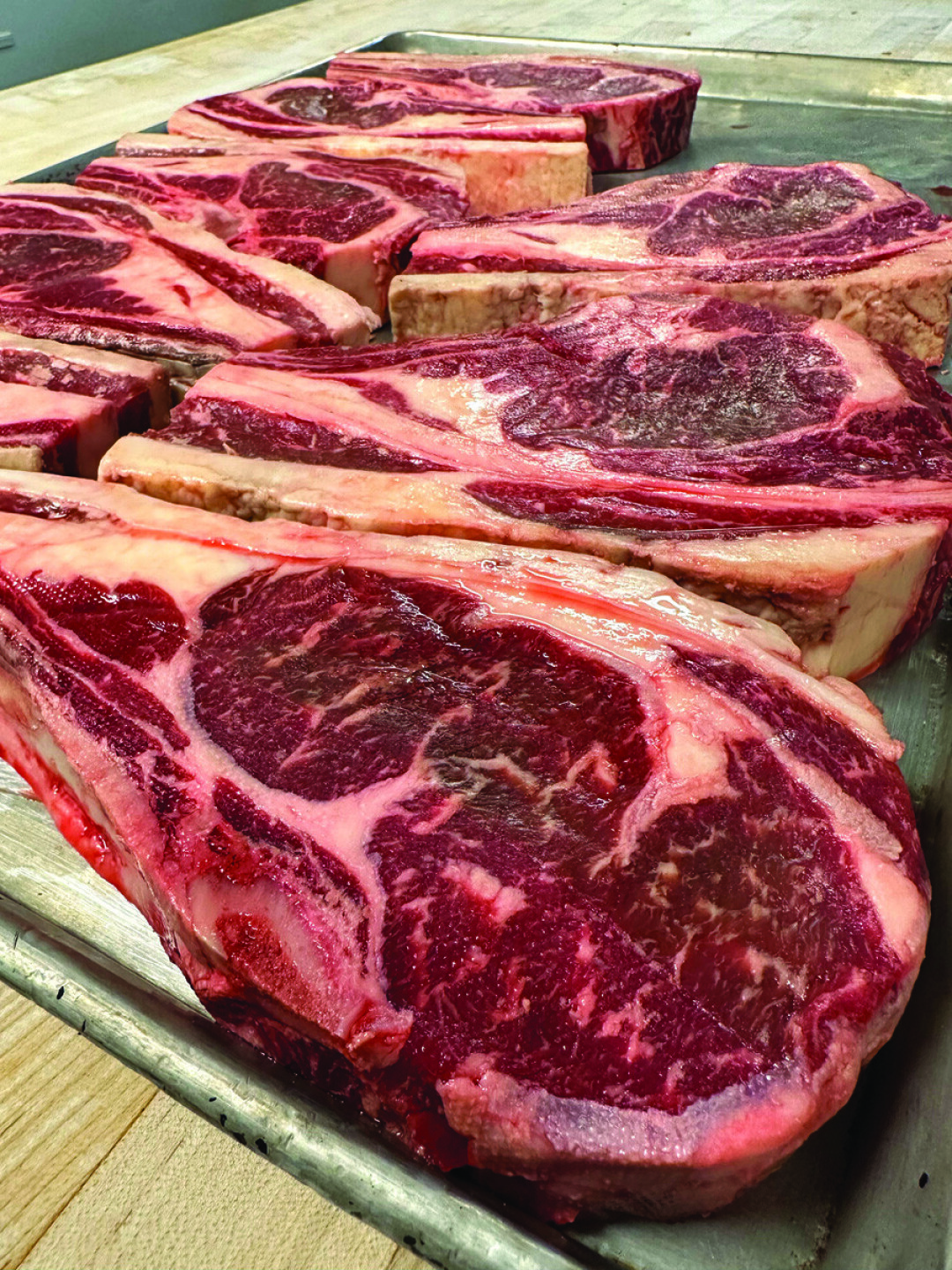
FP: It’s just hard to keep up with the fast moving products like bacon; three pieces on every plate, that’s really hard to keep up on. But most of the pulled or braised meats come from the farm.
AR: Is there a certain feeling you want people to have when they walk through the doors?
NW: I want people just to feel like they have stepped into a unique place, and that they feel welcome and seen, and I really try to focus on making sure that people know we want them here; we’re excited to have them here, we’re super thankful that people are still searching us out over here. Even though it’s next to the campus, it’s not Main Street. We’re off the beaten path a little bit. We’re not the newest or the hippest place in town, but we have been here serving breakfast and lunch for almost 20 years. We want people to feel that, when they walk in, they have roots here. It’s family-run, and we do care about them being here.
AR: What would a regular know about your menu or about the business that somebody who just walks in off the street and has never heard of you wouldn’t know?
NW: That certain staple items on our menu are very consistent—you can expect that if you get the corned beef hash, or Grandma’s enchiladas, or the Vaquero, it’s going to be the same as it was the last time you were here, and it may even be the same as it was when we started in the canyon. They also know that you’re not going to leave here hungry.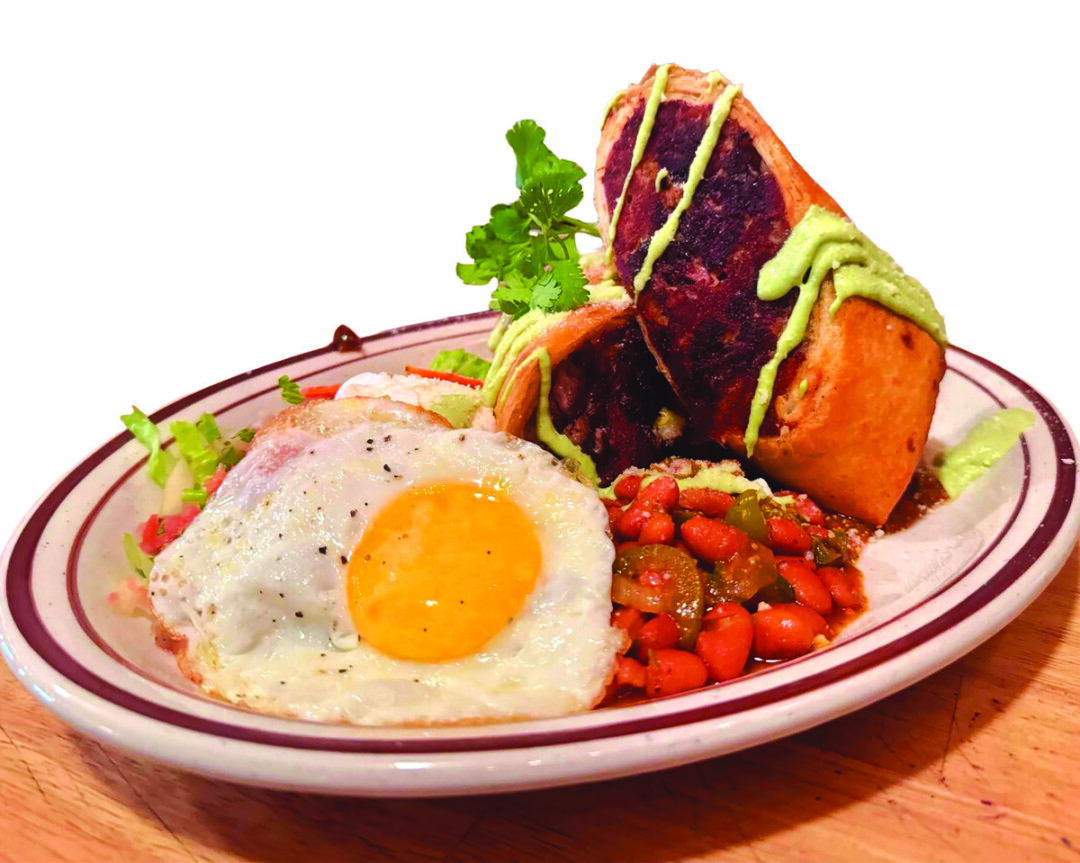
AR: Do you have a favorite menu item?
NW: I get asked that question a lot, and I always have a hard time answering because, even over all these years, I don’t have a favorite. I do love Grandma’s enchiladas. And our corned beef hash is one of my favorites, it’s also a fan favorite. And the old standby is the Vaquero—the breakfast burrito always hits the spot for me.
FP: I’d say the Vaquero as well.
AR: What particular item do your regulars keep coming back for?
NW: I would probably go back to the corned beef hash, the Vaquero, or Grandma’s enchiladas.
FP: And the French toast.
NW: Yes. The French toast, and the chili. We get a lot of visitors who come for the Monte Cristo. People love the Monte Cristo; they’ve heard about it, and they’re excited to try it. It’s a great appetizer, a good one to start your meal with so everybody can get a taste of it.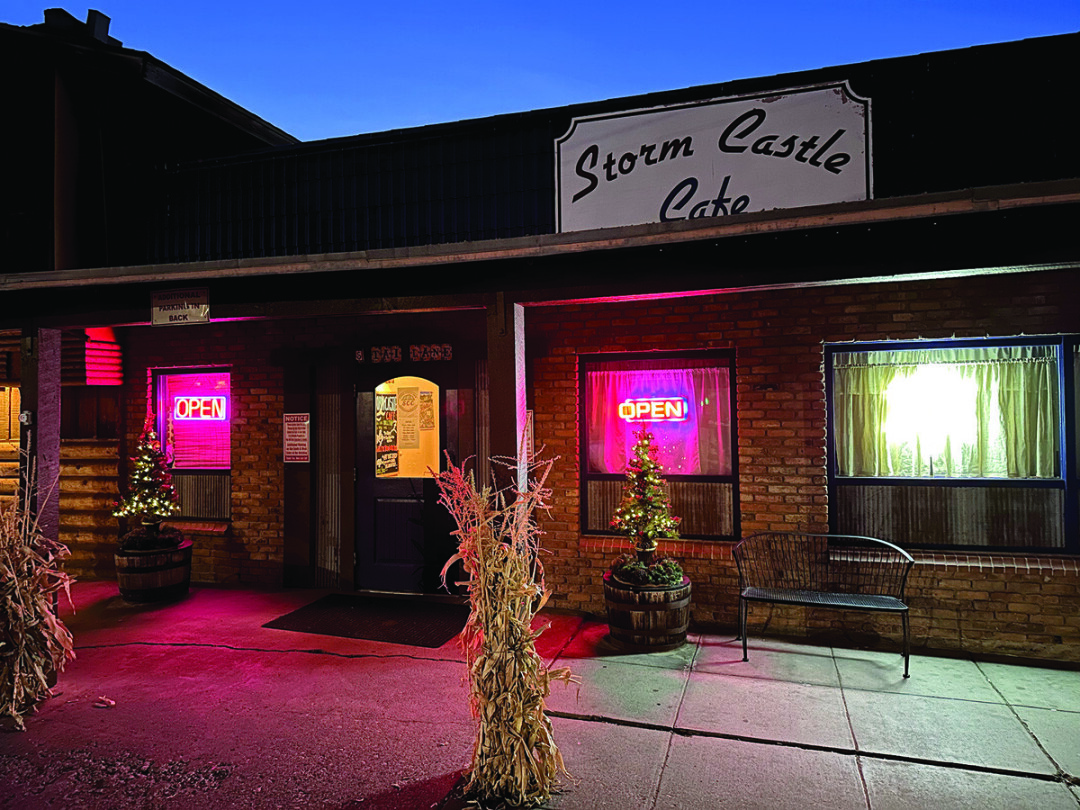
AR: What do you most enjoy about being part of the Bozeman community?
NW: Well, I didn’t grow up in a place where I experienced being part of a community; I’ve been here for 27 years now. It’s come on slowly, but the fact that I know people... I’ve met them through the restaurant. They’ve watched our children grow up in here. I’ve watched their children grow up in here. And there’s a sense of familiarity and friendliness. As Bozeman has grown, having those roots and connections really does mean a lot, [as does] the support that we have gotten from the community, from our regulars, and from them introducing their friends to us.
FP: For me, it’s having roots to the past. Bozeman’s just changed so much; there’s a massive amount of change that’s taken place. I think it’s cool to be able to provide people with a little bit of agricultural history. and the knowledge that they’re buying from someone who’s been here a while.
NW: Storm Castle Cafe and Bozeman Magazine have both been around for about the same amount of time; we’ve both seen a whole lot of Bozeman change in the past 20 years.
AR: So true, and the magazine exists to do its part in making Bozeman continue to feel like a small town, to keep locals connected to both the past and the present. Is there anything new coming up? Are there any seasonal items that are about to hit for the end of the year?
FP: We’re rolling out some new products and new cuts of meat, like a blueberry cheddar summer sausage, and some jalapeño cheddar beef sticks. And we’re not making those, just to be clear. We’re using Feddes Family Meats for all the processing.
NW: We are planning on bringing back some favorites to the menu and growing the menu again. In a Bozeman that continues to change,
Storm Castle Cafe offers a connection to something enduring: a family-run gathering place where tradition still matters, local agriculture has a place at the table, and a little piece of old Bozeman lives on.