How Application Direction Affects Hard Wax Performance on Difficult Hair Growth Patterns
 Hair rarely grows in one uniform direction across areas such as the underarms, bikini line, chest, or neck. When specialists use hard wax for hair removal, application direction affects how well the product surrounds the hair, how much grip it develops, and how cleanly the section can be removed.
A suitable wax should support precise placement without spreading into neighboring growth patterns. Elasticity and controlled adhesion are especially important when a small area contains hair growing upward, sideways, and diagonally.
Map Hair Growth Before Applying Wax
The specialist should examine the direction of growth across the entire treatment area rather than treating it as one section. Underarm hair, for example, may change direction several times within only a few centimeters.
Dividing the area into smaller zones gives better application control. Each section can then be treated according to its own growth pattern instead of forcing one large strip across hairs positioned at different angles.
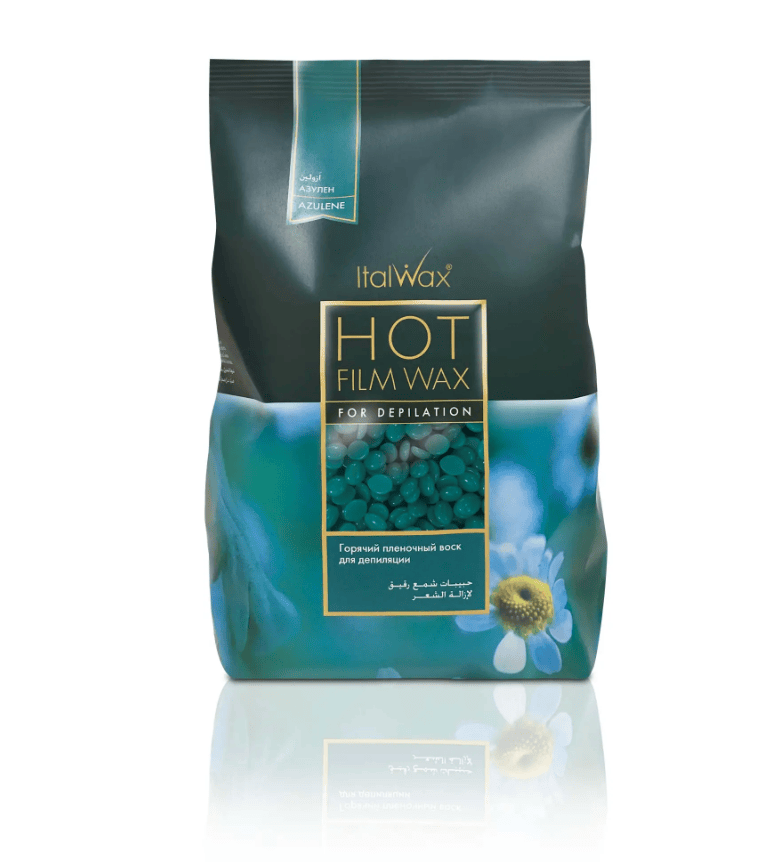
ItalWax professional hard waxes can be compared by elasticity, setting speed, and adhesion when selecting a formula for these detailed treatments.
Application Direction Influences Hair Grip
Professional hard wax is generally applied with controlled pressure so the product can surround the hair close to the skin. Following the appropriate direction during application helps create more consistent contact with the hair shafts.
Difficult growth patterns require more than stronger adhesion. The specialist also needs enough time and flexibility to shape each section accurately.
Several product properties are useful for this type of work:
• elastic texture supports application across curved areas without cracking;
• controlled viscosity helps keep separate sections within precise boundaries;
• reliable adhesion helps capture short or coarse hairs growing at different angles;
• moderate setting time gives the specialist enough time to shape detailed applications;
• stable removal texture helps the wax remain intact when working with smaller sections.
These characteristics make it easier to adapt the product to individual growth zones. A very brittle or overly fluid formula can reduce control even if its adhesion is strong.
Smaller applications may also improve accuracy on areas where growth changes direction several times. They let specialists adjust each section without extending wax across hair that requires a different placement angle.
Removal Direction Matters as Well
Application is only part of the technique. Removal direction affects whether the wax releases the hair efficiently and whether the strip remains stable during the movement.
The removal should remain close and parallel to the skin rather than being lifted upward. A controlled movement helps maintain tension on the wax and reduces unnecessary pulling on the treated area.
Elastic hard wax is useful here because the section needs to remain flexible enough for removal while maintaining sufficient grip on the hair.
Adjust Section Size to Complex Areas
Large applications may be efficient on uniform growth, but they are less practical where direction changes frequently. Underarms and detailed bikini areas often respond better to several smaller sections.
Section size should also match the wax’s setting speed. Fast-setting formulas require efficient application, while a slightly longer working window can help when the specialist needs to shape several edges carefully.
The professional ItalWax range includes formulas with different working characteristics, so technicians can match the product to the complexity of the area and their preferred application pace.