Taking an RV Into Yellowstone: Campgrounds, Roads and Size Limits
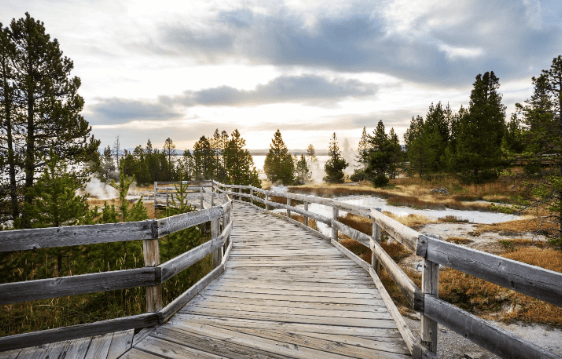
Yellowstone welcomes big rigs, but the campground you book has to fit the full length of your setup. Limits run from 25 to 95 feet, and each number includes any vehicle you tow.
Start With the Full Length of Your RV
Yellowstone posts its length limits as one combined figure for the rig and its tow vehicle. A 35-foot fifth wheel behind a truck therefore needs a bigger site than the trailer alone suggests. Measure the whole setup first, then compare your options.
Older listings sometimes show shorter limits than the current table. Confirm the length limit for your specific site in the reservation details before you commit.
Which Yellowstone Campgrounds Fit Your Rig
The park lists the maximum combined length for each campground:
• Fishing Bridge RV Park: 95 ft
• Bridge Bay and Madison: 60 ft
• Grant Village: 50 ft
• Canyon: 40 ft
• Indian Creek: 35 ft
• Slough Creek and Tower Fall: 30 ft
• Lewis Lake: 25 ft
• Mammoth: 45 ft from May to mid-October, 30 ft in the colder months
Every figure above is a maximum, so shorter setups such as a Class B RV have the widest choice of campgrounds. Tower Fall carries a hairpin-curve warning, so longer setups need extra care before booking there.
Fishing Bridge and Its Full-Service Sites
Fishing Bridge is the only campground in Yellowstone with water, sewer, and electric connections at the site. It accepts only hard-sided units, so tents and tent campers cannot use it. Its 95-foot limit makes it the main choice for the longest motorhomes and trailers.
The other campgrounds lack those connections. Check where you can fill water and use a dump station before you pick one.
Park Roads, Closures and Driving Rules
From Bozeman, the West Entrance sits about 89 miles away, and the North Entrance at Gardiner about 78 miles. Most park roads close to regular traffic from early November to late April. Only the road from the North Entrance to Cooke City is generally open all year, so cold-season visits start there. Roads open in stages each spring and close again in fall, depending on weather. Check the park's road status map before you choose dates.
Four road details matter most with a large rig:
• Park roads prohibit vehicles wider than 8 ft 6 in or longer than 75 ft unless the superintendent issues a permit. This cap is separate from the limits listed above.
• The speed limit is 45 mph unless a sign says otherwise, and animal crossings slow traffic further.
• Firehole Canyon Drive is closed to trailers and recreational vehicles.
• Short closures and delays may not appear on the status map, so conditions can change quickly.
Once you set up camp, unhitch the trailer or the towed vehicle and explore in the lighter setup
Entrance Fees and the $250 Non-Resident Pass
The entrance fee is $35 per private vehicle and covers every passenger for seven consecutive days.
U.S. citizens and residents can also buy an annual pass. The Yellowstone version costs $70 and covers this park, while the $80 America the Beautiful version also works at other federal recreation sites.
Visitors from outside the United States pay a $100 per-person surcharge on top of the entrance fee, starting at age 16. Children under 16 do not pay it. Grand Teton National Park, just south of Yellowstone, charges the same surcharge.
The America the Beautiful Non-Resident Annual Pass costs $250. It covers the entrance fee for one private vehicle and waives the surcharge for everyone it admits. A family of four sharing one motorhome, all aged 16 or older, would pay $435 at the gate with no pass: $35 for the vehicle and $100 per person. The pass costs less and remains valid at other participating sites. You can buy passes digitally through Recreation.gov.
Camping Rules, Generators and Reservations
You can camp only in designated campgrounds. The park does not allow overnight stops in pullouts, parking areas, or picnic grounds, even in a self-contained motorhome.
Generators cannot run between 8 p.m. and 8 a.m., and a few campgrounds do not allow them at all, so check the listing for yours. Several campgrounds have dump stations. Reservations go through Recreation.gov and open about six months ahead on a rolling basis.
Measure First, Then Pick the Campground
Each campground suits only part of the size range. Write down the total length, the connections you need, and the season you will visit. Choose the campground from those three answers, then set the sightseeing days around it.