Professional vs At-Home Teeth Whitening: What Works, What Is Safe and What to Expect
A brighter smile is one of the most requested cosmetic dental treatments, and it is easy to see why. Coffee, tea, red wine, tobacco and simple ageing all gradually darken teeth. Whitening can reverse much of that discoloration, and today there are more options than ever, from dental office treatments to strips, trays and toothpastes sold at the pharmacy.
The choices can be confusing. Some products work well, some barely make a difference and a few can cause problems if used incorrectly. Here is how professional and at-home whitening compare, what is safe and what results you can realistically expect.
Why Teeth Change Colour
Teeth discolour in two main ways. Extrinsic stains sit on the surface of the enamel and come from food, drinks and tobacco. Intrinsic discoloration happens inside the tooth and can be caused by ageing, certain medications, trauma or excessive fluoride during childhood. As enamel naturally thins over time, the yellower layer beneath it, called dentin, becomes more visible.
Whitening products work best on extrinsic and age related yellowing. Grey or brown intrinsic stains, and discoloration caused by injury or medication, may respond less predictably.
How Whitening Works
Most whitening treatments use peroxide, either hydrogen peroxide or carbamide peroxide, which breaks down into hydrogen peroxide. The peroxide penetrates the enamel and breaks apart the stain molecules, making teeth appear lighter. Whitening toothpastes, by contrast, mostly use mild abrasives and polishing agents to remove surface stains rather than changing the colour of the tooth itself.
Professional In-Office Whitening
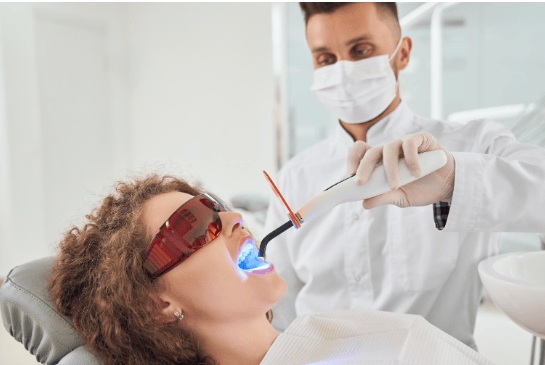
In a dental office, professional teeth whitening uses a higher concentration of whitening gel than products sold for home use. Before treatment, the dentist protects the gums and soft tissues, then applies the gel to the teeth, often in several short sessions during a single appointment. Some systems use a special light to support the process.
The main advantages are speed and supervision. Many patients see a noticeable difference after one visit, and some in-office systems report results of several shades in a single appointment, though individual results vary. Because a dentist oversees the treatment, sensitivity and gum irritation can be managed, and the dentist can first check for cavities, gum disease or worn enamel that should be treated before whitening.
Professional Take-Home Trays
Many dental offices also offer custom take-home kits. The dentist makes trays that fit your teeth precisely, and you wear them with a professional whitening gel for a set time each day over several weeks. Results are more gradual than in-office whitening, but they can be very effective, and the custom fit keeps the gel on the teeth and away from the gums.
Over-the-Counter Products
Whitening strips, paint on gels, pre-filled trays and whitening toothpastes are widely available. They contain lower concentrations of peroxide, which makes them more affordable and generally gentler, but results are slower and often less dramatic. One-size-fits-all trays may not fit well, allowing gel to touch the gums and cause irritation.
Products with a recognized seal of acceptance from a dental association have been evaluated for safety and effectiveness. Be cautious with charcoal powders and do it yourself remedies using lemon juice or baking soda, which can wear away enamel rather than whiten teeth.
Is Whitening Safe
When used as directed, whitening is considered safe for most adults. The most common side effects are temporary tooth sensitivity and mild gum irritation, which usually fade within a few days after treatment ends. Using toothpaste for sensitive teeth, taking short breaks between sessions or choosing a lower concentration can help.
Whitening is not recommended during pregnancy or breastfeeding, and people with untreated cavities, gum disease or exposed roots should see a dentist first. Whitening also does not change the colour of crowns, veneers or fillings, which can leave them looking darker than natural teeth after treatment.
How Long Results Last
Whitening is not permanent. Results typically last from several months to a few years, depending on habits. Coffee, tea, red wine, dark sauces and smoking will gradually bring stains back. Rinsing with water after dark drinks, using a straw for iced beverages, brushing twice a day and keeping regular dental cleanings all help results last longer. Many people use occasional touch-up treatments to maintain their shade.
Choosing the Right Option
The best choice depends on your goals, budget and timeline. If you want fast, dramatic results before an event, in-office whitening is usually the most effective option. If you prefer a gradual change at home, professional take-home trays offer strong results with dental supervision. Over-the-counter products can work for mild staining and maintenance.
The American Dental Association provides consumer information on oral health and whitening, and it is a good place to learn more before you decide.
A Brighter Smile, Safely
Teeth whitening can make a visible difference in your smile and your confidence. Start with a dental checkup, choose a method that fits your needs and follow the instructions carefully. With realistic expectations and good habits, your brighter smile can last a long time.