Relax Christmas Is Twelve Days Long
You know the feeling: You’ve worked for something so hard, or anticipated something so much that, when it finally comes, it’s a bit of a letdown. An anticlimax. Or, an event starts so early and drags on so long, even something good, that you’re relieved when it ends.
Christmas often seems like this for many people. Days of planning and prep, only to end in piles of wrapping paper so large that clean-up involves accidentally throwing away action figures or small pets. And all well before noon, especially for non-churchgoers.
In The Chanukah Song, first performed December 3rd, 1994, Adam Sandler contrasts the Jewish festival of lights with Christmas. He sings, “Instead of one day of presents, we have eight crazy nights.” This take on Christmas seems normal to many people today. However, it would have sounded strange to our great-grandparents and their great-grandparents.
Christmas spans 12 days, even longer than Hanukkah. It’s been 12 days, officially, for going on 1,500 years. In fact, Christmastime is even called Twelvetide. Many of you are thinking, “Yes, Christmas is 12 days long. It starts on December 14 and ends on Christmas.” This is also wrong. Christmas starts on Christmas.
The 12 Days of Christmas is the span in Christian theology between Christ’s birth and the coming of the Magi. It begins on December 25 and runs through Epiphany Eve (January 5). The next day is Epiphany (lit. ‘to shine upon, appear’), also called Three Kings Day. Note that some people begin Christmas at sunset on Christmas Eve, like a Jewish holiday (and used by Santa’s labor union). Others reckon it starts at midnight, the literal calendar definition. Yet others begin the holiday at sunrise on Christmas morning, welcome news for parents with early-waking five-year-olds.
Epiphany, the final bang of the whole shebang, is big fun—and big business in much of the world. Like Christmas Eve and Christmas Day, it has its own foods and customs, parades and parties in Mexico, Spain and France, Ireland and Germany, Italy and Hungary, Argentina, and Brazil. However, it has largely been forgotten in America.
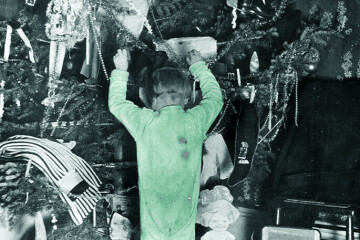
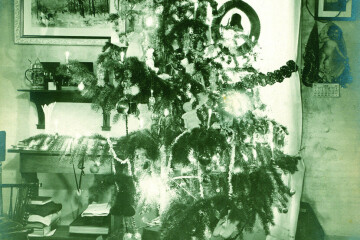
What happened? Over-commercialism. And Boomers. Somehow the first post-WWII generation forgot that their parents usually put up the Christmas tree on Christmas Eve. These days, many people set up trees right after Thanksgiving. That’s like starting Fourth of July fireworks on June 4th. Or carving a jack-o’-lantern the first week of October. (Caution: May lead to mold issues.) Folks wonder why their living room pine, fir, or spruce wants to burst into flames on December 26th. I once saw a meme: “For every Christmas tree put up before Thanksgiving, an elf kills a kitten.” (Cat lovers, relax.) We get the point, but it should read “before Advent” —the traditional period of fasting before Christmas—or at least “before December.” Let November be November.
That said, don’t get mad at the Big Box stores. They put out wrapping paper in mid-October to help you be prepared. You don’t get angry when Walmart and Target start selling school supplies the last week of July. For one thing, the entire store doesn’t Deck the Halls until December. For another, it’s not like the whole town is following suit before it’s even Thanksgiving.
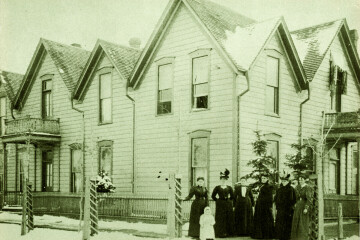
Speaking of Bozeman, if Christmas starts on Christmas, why is the Christmas Stroll the first Saturday in December? This helps downtown businesses, largely locally owned, compete with other parts of the city and area. The timing isn’t coincidental, however. This year, like many years in the past, it lands on December 6th. This is the Feast of Saint Nicholas.
Recall that the valley west of the Gallatin River is largely “Dutch Country.” Over time, some members of the Dutch community became business owners or managers in downtown Bozeman. St. Nick’s Day, Sinterklaas in Dutch, is a major holiday in the Netherlands and Flemish Belgium. Children put out shoes, often wooden, filled with hay and a carrot for Saint Nicholas’s horse. There, and in much of the rest of Europe, if kids have been good all year, they receive a present. If not, they get a twig or a lump of coal. In the English-speaking world the supernatural gift-giving was moved to Christmas itself. Bozeman’s Christmas Stroll is a European Christmas fair in miniature, falling near or even on Sinterklaas, Saint Nick’s Day.
Our neighbors to the north, and others in the Commonwealth, still maintain some customs of a 12-day Christmas. On the 26th, they celebrate Boxing Day, also called St. Stephen’s Day (the Feast of Stephen mentioned in the Good King Wenceslaus carol), and the day of modern Kwanza. Boxing Day was traditionally a day off for servants. Cooks and cleaners worked Christmas Eve and the First Day of Christmas, and so spent time with their families the Second Day.
There’s simple practicality to this system. Think back to years when you juggled dinner with the family, the in-laws, and the step-fam, especially if space was limited or people didn’t exactly get along. Many Brits and Australians spend Christmas Eve with the immediate household, the evening of the 25th with the husband’s parents, and Boxing Day with the wife’s parents. The next year they might mix it up. They’ll hang out with old friends on the 27th and neighbors on the 28th —it’s still Christmas.
While we’re at it, what about the song? The 12 Days of Christmas lyrics were first published in London in 1780, during the American Revolution. However, its roots are much older. There are similar “cumulative” carols from Scotland, the Faroe Islands, Iceland, Norway, Sweden, and France going back centuries. (Historians have found no proof to the claim that the carol was a way for English Catholics to practice catechism after Henry VIII’s reformation.) The lyrics we’re all familiar with date to 1909, an alteration of the 1780 version by English composer Frederic Austin. He and his wife, Amy, were good friends with the singer Gervase Cary-Elwes, the great-grandfather of actor Cary Elwes of The Princess Bride fame. As you wish.
If you take the song literally, after 102 lines, the recipient ends up with 364 gifts, for around $225,000. (We’re assuming the maids, drummers, pipers, etc. were hired and not bought.) 364 is key: it’s one less than the number of days in a year. What’s the missing gift? The “true love,” the ultimate gift. And, if the song keeps to the religious aspect of Christmas, that ultimate gift is Christ.
These 364 gifts include at least 184 birds and 40 cows, a critter count reminiscent of Mammoth Hot Springs during the elk rut... or Noah’s Ark. This is also symbolic. The Ark was a literal vessel of salvation, while Christ is said to be a spiritual vessel. The Ark had a single door; Jesus declared, “I am the door; if anyone enters by me, they will be saved.” (John 10:9). Finally, the Ark was made of wood. Noah was a carpenter and Jesus was the son of one.
Some have argued the golden rings starting Day 5 are ring-neck pheasants or goldfinches. If that’s true, then it’s fully 224 birds. That’s a lot of seed. And old newspapers. (And roast goose.) Note that as Christmas ends in January, New Year’s Eve is the Seventh Day, “Swan Day” or Saint Sylvester’s, and the new year begins on the Eighth Day. Also, it’s traditionally considered bad luck to take down decorations before Epiphany Eve (Twelfth Night). If you miss that deadline, then they’re removed on Candlemas a.k.a. Groundhog Day, the day Joseph & Mary presented Jesus to their Rabbi. Our ancestors followed this practice, and it’s still done in most of Europe. This makes putting up the tree at Thanksgiving even more of a fire hazard than the Ark having only one door.
This gets you thinking... office Christmas parties should be the week after Christmas starts, not before. Many people go back to work on the 26th or 27th, but many people also don’t get much done that week. Imagine not having to worry about buying Secret Santa junk when you’re navigating shopping for family and kids getting out of school.
Christmas is a dozen days long. And it begins on the 25th. It does not end then, no matter what Madison Avenue or Aunt Cheryl & Uncle Bruce claim. If a card arrives on the 26th, relax, it’s not late. It’s still Christmas. If a box is dropped off on the 27th, relax, it’s not late. It’s still Christmas. If a ski party gets pushed to the 29th due to weather, relax, it’s not late. It’s still Christmas. Not tax season. In fact, I triple dog dare you to purposefully send a letter or present so it arrives on one of those days. Some ranching families in Montana still follow the 12 days, with a gift —some store-bought, some handmade—opened each day.
Christmas is the holiday so good it spans two years.