Winter Camping

Winter is the season of dramatic contrasts: the dazzling light of sun on snow, then the full dark of 5PM; the wonderful warmth of a room with a fireplace and the numbing cold just outside the front door; the gaiety of a holiday group, and the solitude of an evening stroll.
Camping in winter accentuates these contrasts; they become more intense, and it’s serious business. It becomes necessary to create your own heat and light. This is especially true of winter backpacking. This is not the rough comfort of a hunting camp, but a winter trip where all of your gear is on your back.
My first summer backpacking trip was not an overnight, but an organized, month-long trek in the mountains. Actually, I had never really hiked until I pulled on a 60 pound pack and hit the trail. Well, I was nineteen. Immediately after returning from that trip, I signed up for a two week January outing. The August trip was pretty hard, but we managed it. How much tougher could a winter trip be? The answer was: a whole lot tougher.
First of all, we still had the 60 pound packs, but in the winter we were on skis. As a midwestern boy, this was also something I had never done. The trails were covered in snow; good thing we had guides to keep us on track. A couple of nights camping in the leafless aspen groves were amazing. The cold was manageable with a bright fire and warm sleeping bags. As we ascended the mountain, things became interesting. The snow deepened. It was necessary to firmly pack down the snow in order to set up tents. If the snow was left unpacked, a person’s warmth would melt it and the base would collapse and take the tent along.
Constructing a campfire was a major undertaking. All of the snow had to be removed from an area about 25 feet in diameter. Sometimes this snow was six to eight feet deep. Once this was done, we built snow seats around the fire ring for sitting. The advantage of all this work was that we were in a kind of basement, and out of the wind. Once the blaze was going, we could sit in our shirtsleeves until well after dark, heating endless pots of water for cocoa, tea, and coffee.
The time required for setting up and breaking down camp used up half of the daylight hours. We had about four or five left to ski up the peak. Above tree line, the wind made our tents useless, so we built a three- room snow cave. There was one big communal room for lounging and cooking, and two side chambers for sleeping. There were about a dozen of us. It was very cozy. We used ski poles to poke holes in the roof for ventilation. One of our guides came into the cave after dark and stated that the wind was blowing 80 mph. We asked how he knew the speed. He said that he could not stand up—that meant 80 mph. So, we all had to go out and see if he was correct. Yup, the wind blew us over like bowling pins.
Our skis worked fine getting us up the hill. They were wide, and distributed our weight. We had climbing skins for the steep stretches. After weathering the storm on the peak, we started down. This was a complete comedy—an endless series of zigzags across the slope.
Wobble down, zig across, fall down, get up and zag; wobble, repeat. Not too bad unless your fall was in deep powder and your pack slipped over your head and pinned you upside down. If the track was through trees, the experience resembled pinball. We did learn, got better, survived.
In the immortality of those early adult years, it never occurred to any of us that we could not do something. Our only concern was to not look stupid while we were attempting it. This was dealt with by realizing that there was always someone who was worse at each skill. In time, memories fade from hard facts to fantasy. For years after that, I camped in three seasons, but kept my winter outings to day use only. I learned to ski and snowshoe competently. Finally, when a friend suggested winter camping, I mentioned that I was experienced.
That outing was a one-night trek up Hyalite Canyon. In fact, all of my winter camping since that first lengthy trip has been intentionally limited to one-nighters—less suffering and more fun. For some reason, the joy of anticipation for trips does not extend to the planning stage for me. That always seems like work. There were three of us on this one. We collected sets of snowshoes, figured out the food, agreed on the times.
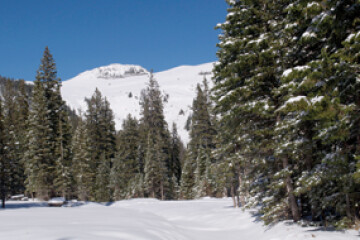
In those days, the Hyalite road was not paved. The standard plan was to drive in until you became stuck, abandon the vehicle, walk the rest, and dig out on the way back to town. We accomplished that task and snowshoed up the rest of the road. We ended the day at Blackmore Lake and set up camp under a relatively snow-free area in a grove of fir trees. Two of us had brought elaborate frozen food; stew, chili, biscuits. The other guy brought a six-pack of beer and a bag of M&M’s. We yelled at him for a while until he handed each of us a cold one. We had the M&M’s for dessert.
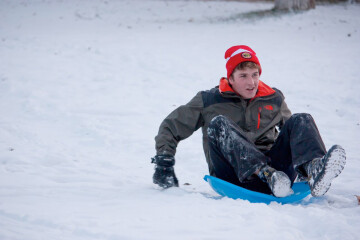
In the morning, we played in the snow like little kids, found a cliff and jumped off it for hours into a twenty foot drift. By the time we packed up to start our trek out, it was dusk. The next few hours included a losing race with some cross-country skiers, a breakneck hitchhike in the dark on snowmobiles, and digging out our truck by flashlight. It was a glorious trip.
It would take just a few pages to relate all my winter camping experiences, as there have not been that many. They were all as eventful as the one just recounted—except one. On a January afternoon, I drove into the Bridgers, parked, and skied off alone with an overnight pack. Within a few miles, I located a camp spot with an open meadow of undisturbed snow to the front and a thick stand of forest behind. I sat on a pad and watched the sun sink beneath the ridge. It was cold, yet I stayed warm in my layers. I was content, relaxing before setting up camp. But after half an hour I got up, strapped on my skis, shouldered the pack and skied back to the truck and camper in the early dark. I didn’t drive anywhere, just started a burner, turned on a light, cooked some dinner and spent the night.
I had been comfortable in the hills, but too alone. I felt vulnerable in the cold and the dark in a way that I did not want to deal with. So I didn’t. Normally, I enjoy some solitude, but that day in that environment, it was too much. Most of my later outings involved a partner and a Forest Service cabin rental. Those were wonderful times. Carefree skiing without worry about weather or storms, since there was a refuge at our destination. That feels like a different story for another time.
A note on gear: In the 70s, comfort and weight were not as important as function. Things had to work. Sometimes that meant heavy and clunky. Our skis and boots were Army surplus, 10th Mountain Division. They were red, white and blue wooden skis, giant leather boots and cable bindings. Ugly and cumbersome, but they worked. We wore mostly wool; heavy, scratchy and bulky, it performed, wet or dry. We had basic stoves, but relied on campfires for both warmth and some of our cooking.
Modern outdoor equipment and clothing is light, comfortable, and warm. The popularity of the ski industry in the last fifty years has led to amazing innovations in fabrics and techniques for winter clothing. There is micro-fleece, wool blends, layering, seemingly endless choices for warmth and for wicking away moisture. Skis and their hardware are manufactured for every type of skiing and boarding, and for any snow conditions. Winter camping is not easy, but now it is more fun.
Beyond the reminiscing, the stories, the clothing and gear requirements, there is something psychologically different about the outdoor winter experience. While being in the mountains is always special, in winter it becomes intense. It is like the difference between local theatre and a Broadway show. Things are magnified; bright light and biting cold suddenly becomes pitch dark, and even colder. All movement must be deliberate, thought out.
There is a need to concentrate; that becomes easier in the calm, the overwhelming quiet we inhabit in that environment. It is not hostile, but it is foreign. Move slowly and deliberately, enjoy and respect.