Late Winter In Hyalite

Bozeman’s winter may have been a dry one, but half an hour south and two thousand feet up, the Hyalite range was still teeming with snow in early March. It was then that I hiked the Blackmore Lake trail, a moderate five-mile trip to Hyalite Reservoir and back.
The Douglas fir and lodgepole pine stood starkly in the calf-deep snow. We slipped up the icy trail, finding footholds in the gritty mud-slush of winter tread. The occasional cross-country skier passed, getting a good workout on the late-season tracks.
As we climbed, the conversation turned to mycorrhiza, the network of underground fungi that bring nutrients to plants’ roots and take carbohydrates in return. My hiking partner Cedar Lloyd, a graduate student in environmental studies at the University of Montana, explained that most plants rely on this symbiosis. Roots are good for structural support or storing tubers, but struggle to extract minerals from soil without fungal help.
She suddenly stopped mid-sentence and yelped in delight.
“Look!” she said. “Off the trail!”
We stumbled down into the woods and stood around a strange, waist-height tendril adorned with bright red buds like suckers on an octopus’s tentacle. Innocuously named a woodland pinedrop, it was in fact a parasite that saps nutrients from nearby pine trees’ roots by tapping into the surrounding fungi. Unlike most organisms in the mycorrhizal network, the pinedrop doesn’t give anything in exchange for what it takes. Cedar’s opinion, though, was that there is some as yet unproven benefit for the pinedrop’s hosts. Forests tend to work together, she thought, not against themselves.
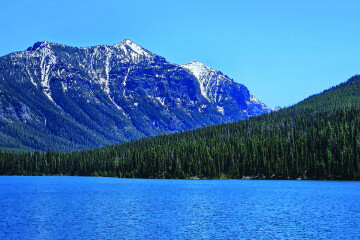
We continued on up to the reservoir. The lake was covered by a thick sheet of ice and snow. We walked out onto the frozen surface, finding it strong enough to support us. The sky was clear blue behind some wisps of cloud, and the mountain air was silent besides the crunch of our boots in the snow. A white peak peered through the gap between two hillsides.
The forest lay quiet all around us, waiting for spring. This summer may be a “bad” fire season, but when some trees burn, others will take their place. Certain cones from the lodgepole pine only spread their seeds when the resin that seals them shut is melted by the high temperatures of wildfire flames. The forest has its methods. We come in with our own. The foam retardant used to suppress wildland fires might also damage mycorrhiza — this is the subject of Cedar’s research.
In Montana, fledgling bald eagles are now flying over rivers and dragonfly larvae are crawling on stream beds. Conifers are starting to grow again, even though they look the same from the outside year-round. The days are lengthening.
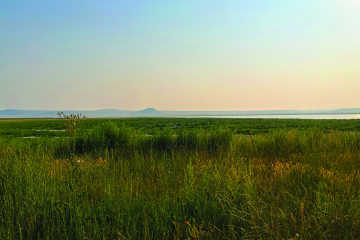
The road down from the trailhead follows Hyalite Creek, which in March was swollen with cold meltwater and crowded by ice chunks and fallen branches. Soon we were back in the plains, dry and clear of snow, the fields empty from last year’s harvest. Bozeman lay below us. It would soon be heading into another summer, open and unknowable.