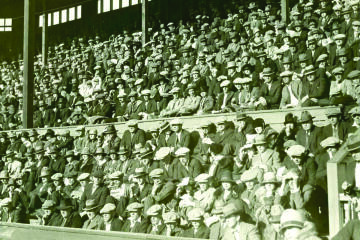
Baseball and The Big Sky: America’s Pastime in the West Part One: Roots and Sticks

Montana might not be first place you envision when hearing baseball. The earliest game using modern rules took place in New Jersey across the Hudson River from New York City. But that’s only part of the story. The Old West was chock full of baseball and Montana has produced many notable players, including the only pitcher to hit a World Series grand slam. Olympic gold medalist Jim Thorpe played for a Treasure State team. So did a celebrated Black musician. Montana is even tied to the American League’s creation. Surprised? There’s more in store.
Like the Old West itself, the history of baseball is riddled with myths. Many people grew up hearing Abner Doubleday (1819-1893) invented the game from scratch in Cooperstown, NY in 1839. Sports historians have done their homework, and li’l Abner wasn’t even there at that time. This story was a publicity stunt to give America’s pastime exclusively American roots. Cooperstown does have a true claim to fame: Its namesake family is that of James Fenimore Cooper (1798-1851), author of The Deerslayer, The Last of the Mohicans, The Pathfinder, The Pioneers, and The Prairie. These Leatherstocking Tales were precursors to Wild West novels, including many set in Montana.
Another myth —propagated by the 1997 Ken Burns series of all things is that Lewis, Clark, York and crew played baseball with the Nez Perce in 1806. Instead, the journals show the Corps of Discovery and their invaluable hosts played prisoner’s base. This has similarities to baseball, as it uses two teams, tagging, and a playing field. However, it’s not a ball-and-stick game. This is seconded by SABR, the Society for American Baseball Research. Just because base is in a name doesn’t mean it’s baseball. (“All Your Base Are Belong to Us!”) Prison base is still played in gym classes around America. One version uses bouncy-balls —a combo of the game plus dodgeball, known as prison ball. Some Montana kids wittily call this “Get out of Dodge... ball.”
Despite the Lewis & Clark snafu, Native Americans did have ball-and-stick games. Lacrosse is the oldest organized sport in North America. The Wyandot (Huron) and Mohawk, both Iroquois people in today’s U.S. and Canada, and the Choctaw in the Deep South, were known for their stickball skills. The Maya and Aztecs played another sport in large courtyards with stone hoops. Heavy rubber balls were bounced off hips, and play apparently had attributes of volleyball, racquetball, and basketball. There are also murals showing a game using bats, maybe akin to Basque jai-alai.
Instead, baseball’s roots are in early American stickball games like rounders, brought to the Colonies by the English. Had Montana-voyaging Clark and Lewis played a bat-and-ball game, they would have penned “stick-ball” or “base-ball” in their journals, names for rounders in the 1700s and early 1800s. Meanwhile, the Scottish devised golf and the Irish have hurling —still proudly played in Butte.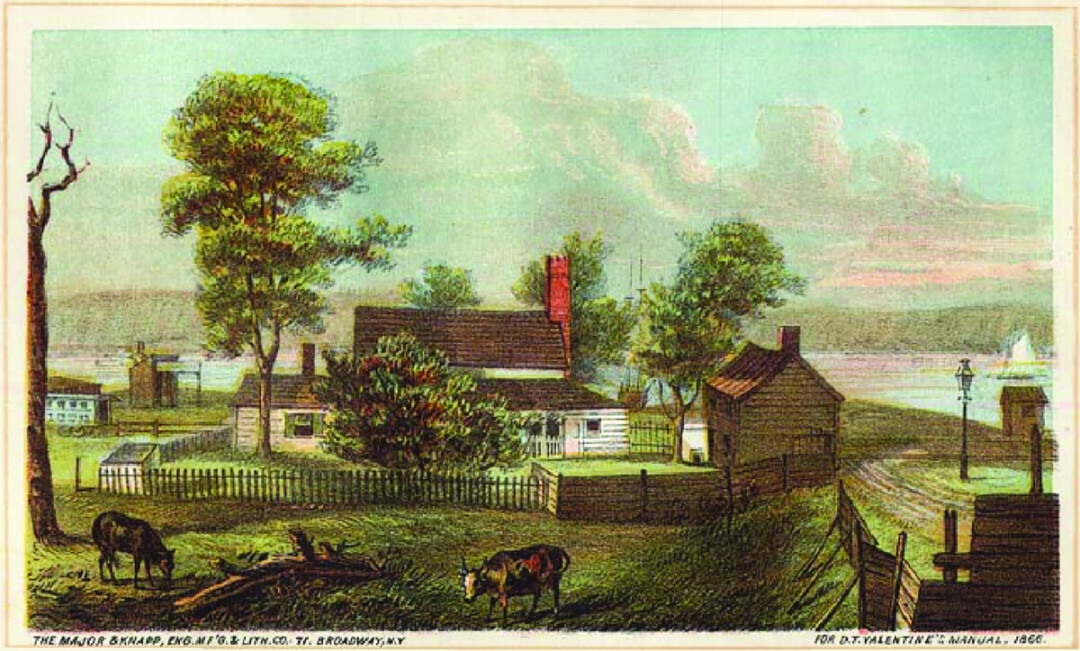
Hurling might be related to rounders in England. If not, then stickball games arrived with Germanic folk: Flemish, Normans and Franks, Norse and Danes, or Jutes, Angles, and Saxons. A drawing from the city of Tournai in Belgium shows a bat-and-ball game. The illuminated art is from the 1300s, the same century as the Black Death. A woman holds what looks like a softball; next to her is a man holding a wooden (ash?) bat the length of his leg. She’s either going to pitch it, or hand it over for him to self-drop and connect. Several men and women stand at a short distance, arms forward, ready to catch the pop fly. But, no peanuts or popcorn are present —both crops are from the “New” World.
As the 19th Century progressed in America, rounders (which is still played in the UK, especially by girls) evolved into “town ball.” Townball had many forms in various places; one version was known as old cat. If rounders is the relaxed grandfather of baseball—and cricket is its rather formal great uncle —then townball is its rowdy, black-sheep father.
Down-and-dirty townball became modern “base ball” in the 1840s, with the introduction of the Knickerbocker Rules of the Knickerbocker Ball Club of NYC. Lawyer William Wheaton, William Tucker, Dan “Doc” Adams, and Alexander “Alick” Cartwright Jr. (1820 NYC – 1892 Honolulu) formalized the regulations, including the three-strike rule.
Ironically, the name Knickerbocker was already linked to a game. Washington Irving (1783- 1859), author of The Legend of Sleepy Hollow, first used the Hudson Valley Dutch surname Knickerbocker to refer to NYC patrician families. Its older spelling is Knikkerbakker, literally ‘marble baker,’ a person who made children’s clay marbles. These artisans sometimes diversified into stoneware bottles for jenever, the ancestor of gin.
A major change with the Knickerbocker Rules was the elimination of townball’s “soaking” or “plugging,” throwing the ball at the player for an out. This enabled baseballs to become harder. At first, game scores increased as there were fewer outs minus the plugging. Over time, this was balanced by harder-to-hit pitches —the early sinkers and spitters.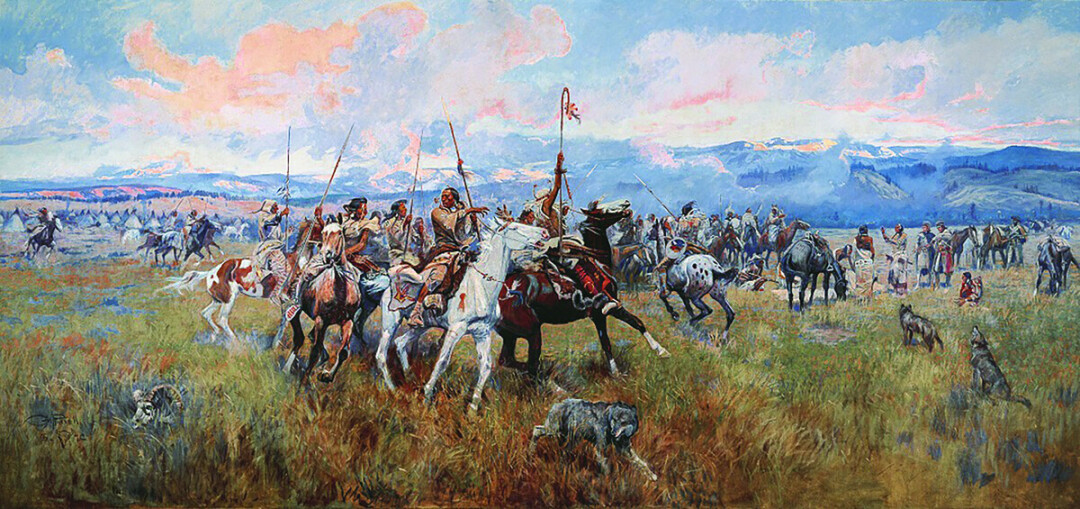
By 1845, The Knickerbockers, using club rules, were playing over the Hudson River at the Elysian Fields in Hoboken, NJ. (Other teams started practicing there even earlier, such as the NY Club a.k.a. Gothams in 1843.) It was here in June of 1846—the same summer Fort Benton was founded— that the first documented modern baseball match took place. Less often mentioned is that the Knickerbockers were shellacked. They lost to the New York Nine in four innings. Score: 23-1. Despite this the codified game really took off, with more played there that summer and fall.
The Elysian Fields, birthplace of baseball, is the forerunner of Central Park, Coney Island, and Disneyland. Imagine standing there in 1846; across the water sprawl a few farms. (Today, this is where Downtown Manhattan slides into Midtown.) Within sight of the first baseball game sits the original Rapelje cabin, right where 34th Street meets the river. Joris & Catalina Rapelje were two of the founding settlers of New Amsterdam; their nine children are ancestors of millions of Americans — including many of the first baseballers. Notably, the Rapeljes were Huguenots originally from near Tournai, the city with the illuminated ballgame. Rapelje, Montana, the only town in the U.S. named for the family, honors descendant John M. Rapelje, Northern Pacific train master in Glendive, division superintendent in Missoula and Livingston, and later VP of the railroad.
Lewis & Clark didn’t play baseball here, but it did arrive in the West right after its creation. Easterners brought it to the California Gold Rush 1848-1850. Settlers trickled into Montana to ranch and farm in the 1850s; when gold was discovered in Alder Gulch (Virginia & Nevada Cities) and Last Chance Gulch (Helena) in 1863 and 1864 there were already some operations in the Deer Lodge, Beaverhead, and Bitterroot Valleys. There may have been ballgames at Fort Benton in the late 1840s and 1850s; baseball was surely played on early ranches in the 1850s and 60s.
The Civil War (1861-1865) solidified the success of baseball in America. Before the conflict, cricket was equally popular in the U.S. However, it requires an oval outfield and a 66’-long flat pitch (center of infield), like lawn bowling. Baseball is more forgiving. Got some open ground, sorta square or triangular? Space past the privies or the veggies? Good, you have a game. It can be grass, dirt, or sand. It can be bumpy or weedy. (Many Montanans know the joys of outfield prickly pears.) During the chaos of war baseball eclipsed cricket for Northern and Southern soldiers, and the game held its position in peacetime. Meanwhile, those escaping the devastation took the sport to Montana and the rest of the West, especially to mining camps and army forts.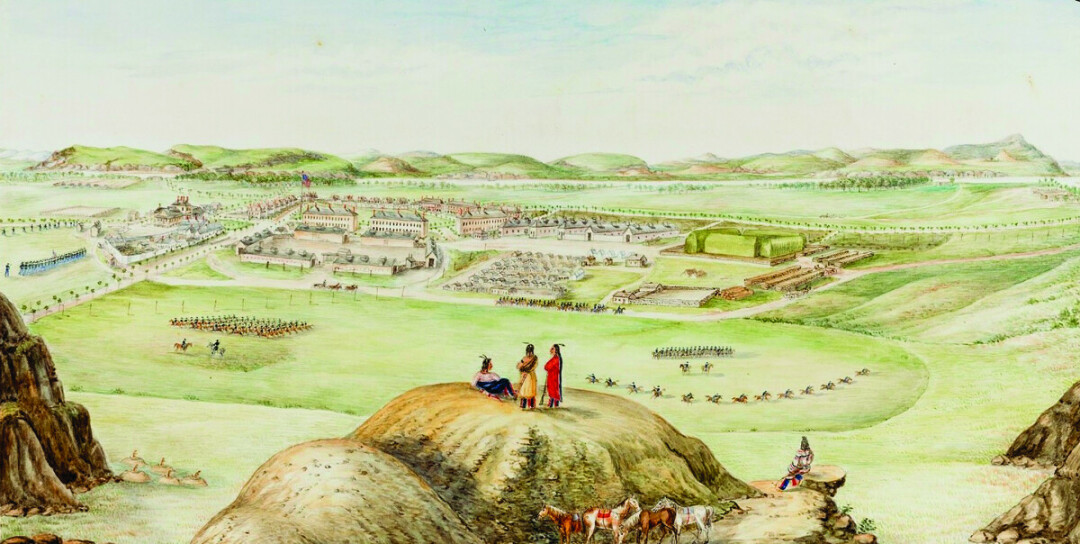
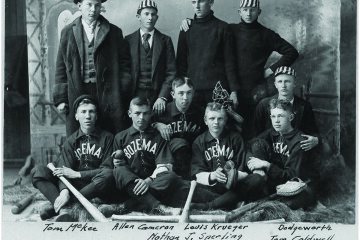
The earliest recorded organized baseball game in Montana was played 160 years ago on June 2, 1866, a year before its full-on national craze. Virginia City’s Montana Post reported on the first innings of its Rocky Mountain Base Ball Club, which split into two teams to play. Score: 121-88. By 1868, Virginia City had two more clubs, the Montana BBC and the Occidental BBC. The Helena BBC formed in 1867. The Gallatin Valley had several teams by the early 1870s, including the Fort Ellis Club (who played Helena for $500 in 1870), the Bozeman BBC, and Bozeman’s Mutual BBC. In 1873, the craftsmen and merchants of Bozeman BBC beat the soldiers at nearby Fort Ellis, but not without a dislocated finger, a skinned nose, and a sprained ankle.
By the late 1870s, more towns had organized teams. Diamond City in Confederate Gulch (producing 20 tons of gold worth $3 billion today) often played nearby Canton. In 1882, the silver camps in the Little Belts—Barker (Clendenin), Monarch, and Hughesville (Hughes City)—routinely competed. Fort Shaw, Sun River, Billings-Coulson, and Fort Assiniboine also formed teams at this time. Miles City regularly beat nearby Fort Keogh in 1879 and following years, but the enlistees kept plugging away. They beat Princeton University...
To be continued...
Topher Sedlak’s kin have been in Montana for seven generations. When he’s not doing chemistry or genetic genealogy —including finding the bio parents of adoptees— he’s in the mountains with his family.

A Hot Contest: The 1908 Gallatin County High School…

The Prettiest Place in the World: Flora Gardner’s Journey…

The Prettiest Place in the World Flora Gardner’s Journey…

The Alder Gulch Gold Rush

The Prettiest Place in the World: Flora Gardner’s Journey…
Baseball and The Big Sky: America’s Pastime in the West