Baseball and The Big Sky: America’s Pastime in the West
Part Two: Minors & Majors
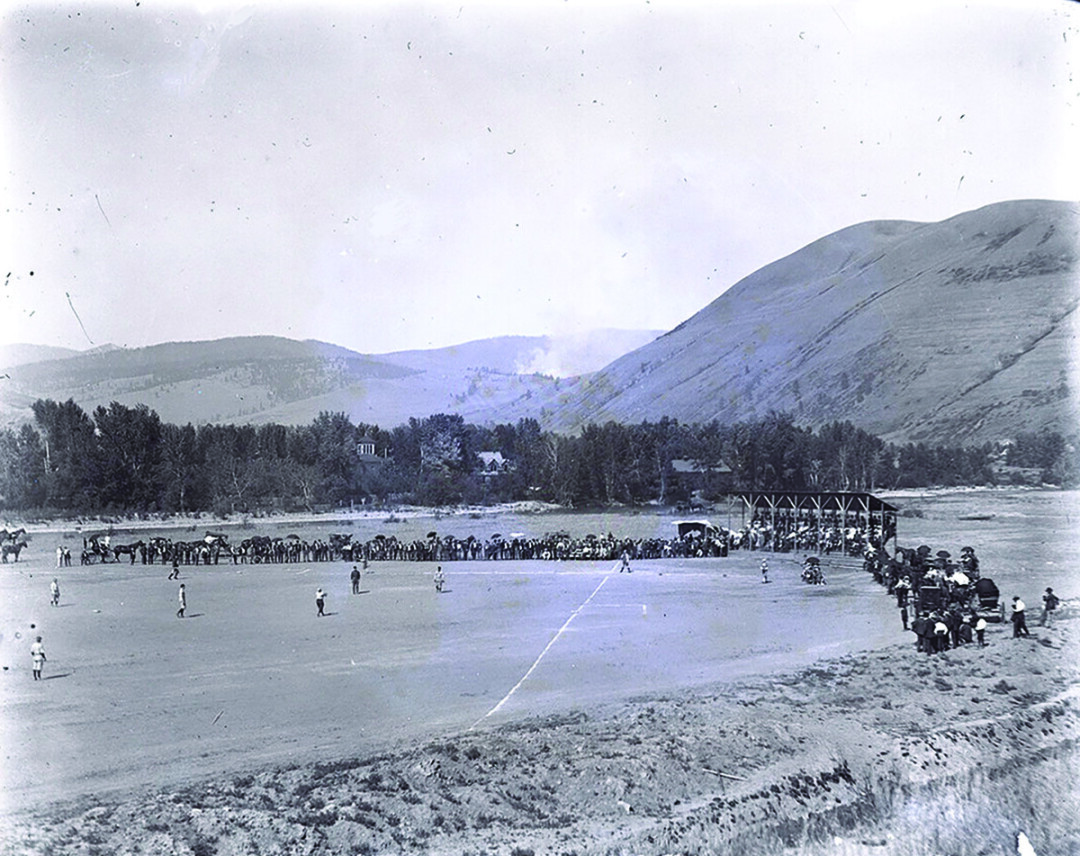
...the debut year of the Louisville Slugger and legal overhand pitches, and bested Miles City in many following games. That summer, the Sun River Sun reported Glendive had a women’s club, a decade before The Bloomer Girls. Glasgow and others followed suit. In 1885, Miles City’s Daily Yellowstone Journal mentioned the Chinese in Helena, then 10% Cantonese, had picked up the game. The same decade, newly-settled coal and ore towns like Sand Coulee, Maiden, and Nye had teams.
Famous 20th Century all-around urban rivalries crystallized in this era. Helena, the territorial capital, and fellow gold town Marysville were especially known for their high-scoring teams. They often got the best of Butte, 50 miles to the southwest. In 1881, Fort Benton’s River Press summed it up: There was a base ball club in Butte / Whose merits the Miner [newspaper] did toot, / But the Helena Nine / Waltz through them so fine / Like a double-geared lickity-scoot...
The last line, straight out of Dr. Seuss, refers to the new American Star Bicycle, a reversed penny-farthing with gearing using a pair of treadles and leather tongues; bicycles were still nicknamed “scoots” from the act of pushing off. In 1887, the capital beat Livingston in a game the Helena Independent called the best ever played in Montana. Around $10,000—$4 million in relative wealth today—changed hands in betting. The same year, Marysville, site of the legendary Drumlummon gold mine, built a grandstand for 3,000 fans. Today this is Montana’s oldest ballpark. In October 1889, the Marysville BBC’s players were crowned Northwest Champions after defeating Seattle and Spokane. This was just weeks before Montana became a state on November 8; Washington entered statehood three days later.
Part Two: Minors & Majors
For decades, Western baseball was only loosely organized, largely due to challenges of travel. Cavalry played infantry, and towns played those adjacent forts—miners and sergeant majors. Local papers published box scores from far and wide. Winners in each region played by invitation. Spaces are immense but roads were basic. Pennsylvania fits inside Montana three times with room to spare. The first pro leagues were therefore in the East, in cities linked by the railroad—which didn’t push through the Northwest until 1883. The National League, a response to the corrupt American Association, was founded in 1876 by William Hulbert—a cousin of Bozeman’s Hulbert Road Hulberts—and Albert Spalding, founder of the athletic gear company.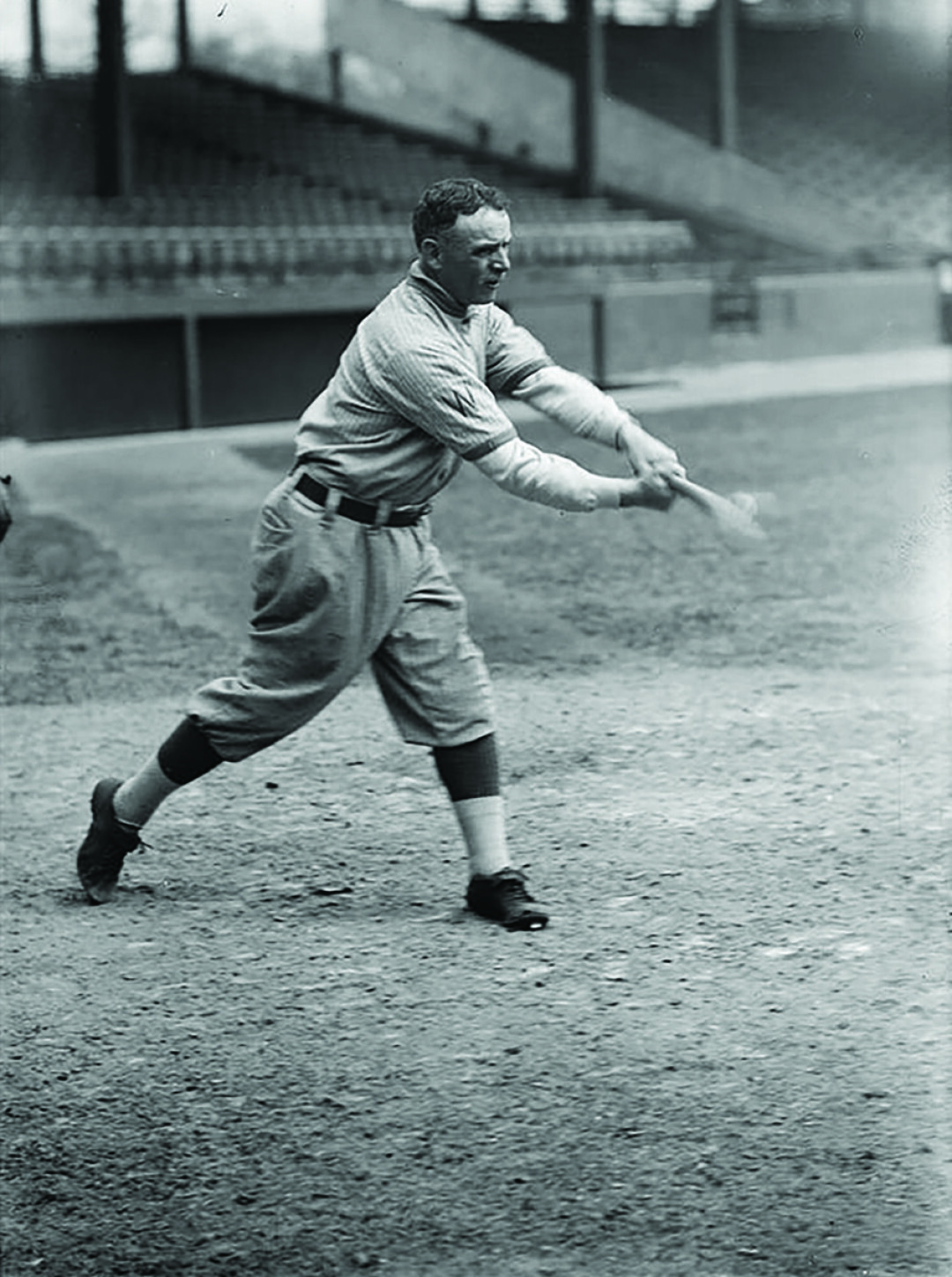
The first Montana State League dates to 1892, the decade wearing gloves became standard. Bozeman, Butte, Helena, Great Falls, Missoula, and Philipsburg started the season on Decoration (Memorial) Day. Helena games were at its new Central Park east of the Broadwater Hotel, famed for the world’s largest indoor swimming pool—over twice the size of an Olympic tub. Bozeman and GF were out early; Missoula won the second-half title but didn’t have enough total wins. That October, Butte and Helena played four games of a five-game series, each winning two. However, Helena skipped the deciding match in protest over umpire selection and ticket receipts. Butte won by forfeit. The 1892 Class B Montana League produced 35 future major league players but was extinct in 1893, the founding year of MSU and the worst Depression before the 1930s.
Although Missoula wasn’t finals-bound, its team was an incubator affecting the very future of baseball. That fall, its star pitcher was Missouri native Clark Griffith (1869-1955). Griffith had thrown for the St. Louis Browns and Boston Reds in 1891 before the American Association disbanded. In 1892, he went west, playing for the Tacoma Daisies. When the first PNW League also dissolved, the tricky right-hander signed on with Missoula. Griffith claimed he invented the screwball that summer, where it ripened in the Garden City. Griffith told his nephew, Lee Duncan, about games against Butte: “When I pitched in Missoula... I was showered with five-dollar gold pieces. I made more money... in one afternoon than I made in Tacoma all season.” Baseball was his future.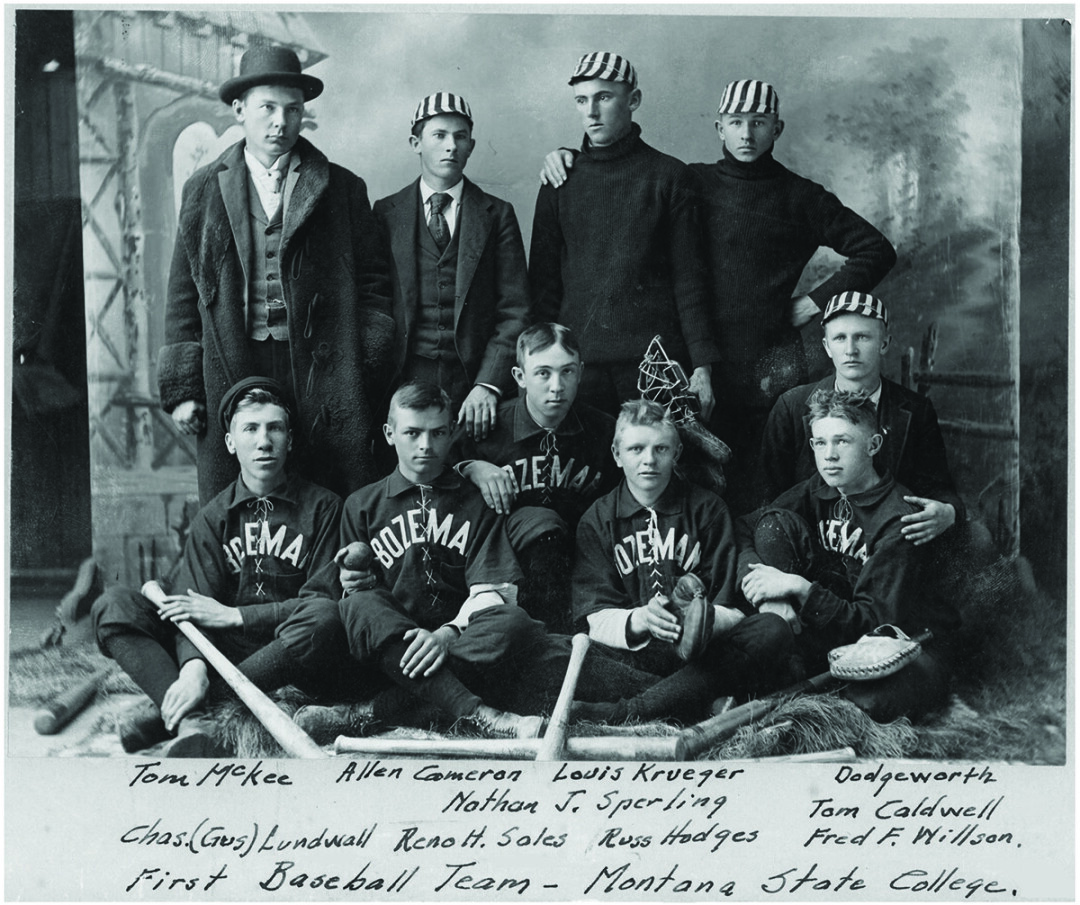
Griffith went on to pitch for the Chicago Colts (Cubs) for ten years, where he won 151 games and became “The Old Fox.” However, he’d caught Montana fever, buying a ranch near Craig—managed by his brother, sister, and mother—where he lived off-season. In 1900, Griffith organized a players union, largely planned at the ranch. Chicago bigwig Charles Comiskey was already trying to organize a “clean” rival to the National League; the hurdle was gathering enough top players. With Clark Griffith’s input and crucial connections the American League launched in 1901. Comiskey then hired him to pitch for and manage his new White Stockings (Sox).
All the while, Griffith yearned to own a team. His chance came with the Washington Senators in 1911. He needed $27k but had only $8,000, so mortgaged his beloved ranch. The First National Bank of Montana agreed to a $20k loan, enabling him to become majority owner. He also managed the Senators 1912-1920, after steering the NY Highlanders (Yankees) 1903-1908. In 1919, he mortgaged his ranch again, the Bank of Montana came through, and he increased to 80% ownership. Griffith’s Senators, with Hall of Fame pitcher Walter Johnson, beat the NY Giants in a 12-inning Game 7 to win the 1924 World Series, which ESPN calls the 3rd best of all time. The Senators played in Griffith Field, where he popularized the hit-and-run and helped ban the same dirty pitches he’d perfected in Missoula. Clark Griffith was inducted into the Hall of Fame in 1946. In 1960, the Senators moved to Minnesota and became the Twins.
Montana formed another minors league in 1900. This included none other than Hall of Fame shortstop Joe “Pretty” Tinker (1880 KS-1948), who received his nickname here. Tinker was sold by Denver to the Great Falls Indians, where he started the 1900 season. After payroll issues Great Falls sold him to the Helena Senators the same summer. That September, GF played Helena in the championship series, which included a notorious Game-4 umpire fight catalyzed by Tinker’s foul mouth. According to “Pretty,” the Helena fans, “took a strong liking toward me.” His batting improved in the capital city, up to .322 after 50 games, landing him with the Cubs in 1902. His time in Chicago is immortalized in one of the game’s most famous poems, “Baseball’s Sad Lexicon,” by NYC columnist and Giants fan Franklin Pierce Adams. This is better known as “Tinker to Evers to Chance,” a refrain referring to Tinker’s stellar double-play trio with second baseman Johnny Evers and first baseman Frank Chance—which secured four National League pennants and the 1907 and 1908 World Series.
As in 1892, the 1900 MT League stopped short—this was a chaotic era for baseball nationwide—but did create 27 major league players. The next year had no organizations, but there were still amateur matches around the state. A particularly notable game took place Sunday June 30, 1901. That sunny afternoon, Missoula hosted Butte at the South Side Grounds along the Clark Fork River; back then the first-base line was parallel with the riverfront. Mizzu was undefeated after six previous games, led by team captain and right fielder Hugh “Hughey” Campbell (1868-1955). Paul Lejeune, a Belgian, was on left field. Third base was Campbell’s brother-in-law Owen Kelley. First baseman Ed Mulroney was home from finishing law school at the University of Michigan. The clincher was George Andrews, who’d pitched pro around the West.
Butte batted first. Third up was John Scander (as Scanter in the 1900 Census), who hit a good pitch by Andrews... into the river. The ball likely landed fair but rolled to foul “ground” over the bank. Campbell then jumped into June’s high water, found the ball, and threw it dripping wet to the infield, all within seconds. Scander was tagged out at home plate and the Missoula crowd roared.
Butte was ahead 6-0 mid-game but Zootown rallied, winning 7-6. One of Butte’s strongest hitters and runners was 31-year-old catcher Sam Freeman. He knew Campbell well—their Missoula team bested Spokane in the Northwest Series of 1895, a repeat of Marysville’s 1889 win. Freeman also happened to be Black. Butte’s club was integrated in 1901, 46 years before Jackie Robinson shattered the MLB color barrier with the Brooklyn Dodgers. (Robinson was not the first Black player in the majors; Moses Fleetwood Walker caught for the Toledo Blue Stockings in 1884.) 1869 saw the first known interracial adult ballgame, but without mixed crews. This was between the all-White Olympics and the all-Black Pythians, both of Philadelphia. Despite its amateur status, Butte’s 1901 team—who recruited Freeman—is significant.
Sam Freeman (1869 IL-1939 Cheyenne, WY) started at Fort Missoula in 1891 as one of the 25th Regiment, better known as the Buffalo Soldiers from their bison hide coats. The next year, he was on mixed-race fort teams, before any 1894 regiment-only teams. These played each other and Missoula teams, with U of M students also joining in. Soon, Missoula clubs—including the 1895 NW Champs—had Black players. To be continued...