Arctic Oil Montana Wild
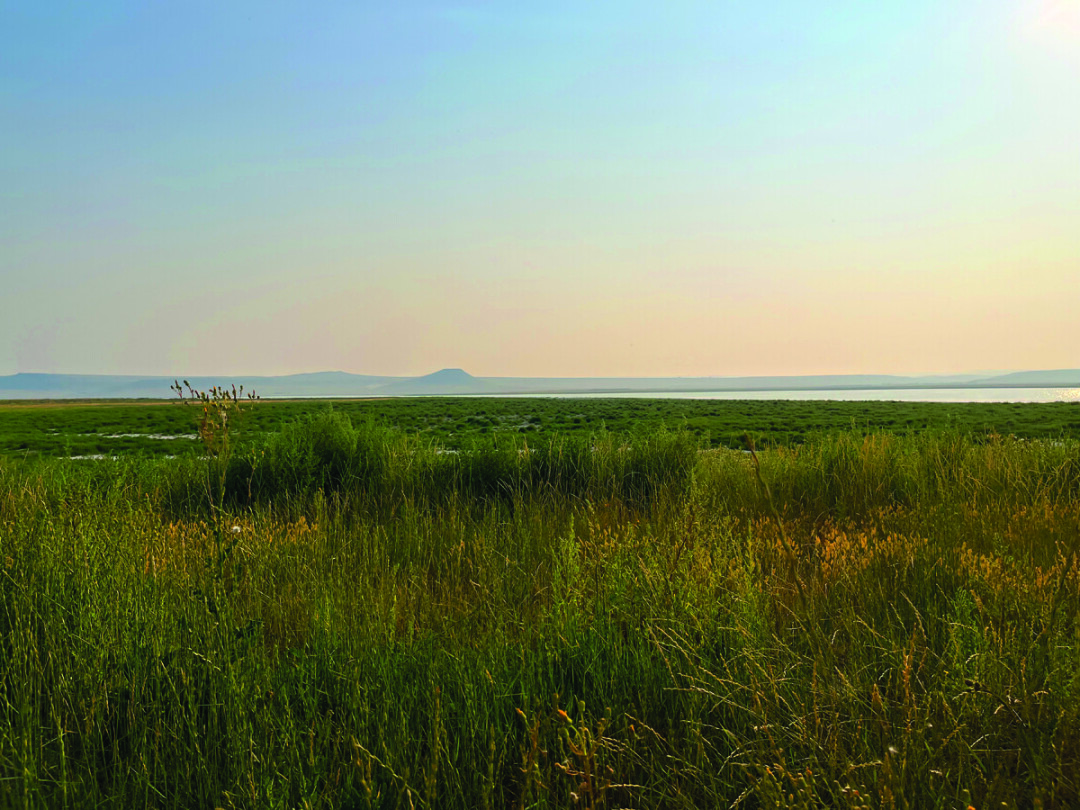
The world exists in cycles, which we split into eras and epochs. There is a herd of caribou, around 180,000 strong, that have been migrating from what is now the Yukon and Northwest Territory of Canada to the arctic coastal plain of Alaska — a journey of 2,700 miles — for at least two million years. This is as far back as the start of the Pleistocene.
They come here to birth their calves — 40 to 50 thousand each year, birthed over the span of a few days. Hundreds of species of migratory birds, as well, come every summer from all 50 states and as far away as South America, Asia and Africa.
The Gwich’in Athapaskan natives, who live south of the coast, have hunted the caribou for 30,000 years. It has traditionally been their main source of food, as well as for innumerable other items of daily living, for which almost the whole animal is used. Caribou is still a staple of their diet.
Shorter cycles are also at work. The Arctic National Wildlife Refuge in northeastern Alaska, which includes the coastal plain, was first established in 1960. Oil was discovered in Prudhoe Bay, just west of the refuge, in 1968. Congress voted to protect most Alaskan federal land in 1980 with the landmark Alaska Lands Act, but a provision allowed for oil and gas development at a later date in 1.5 million acres of the coastal plain, said area receiving the name “1002” due to being specified in Section 1002 of the act.
In 2018, Congress passed a bill to open 1002 for drilling. Lease sales to oil companies started in 2021. The first two auctions attracted zero bids amid legal battles; after the third sale in early June of 2026, ten percent of the land has been claimed by oil companies. Three more sales are mandated between now and 2035.
In Montana, the arctic seems far away. But hundreds of thousands of the snow geese and tundra swans that migrate to the arctic plain stop on the way at Freezout Lake in Choteau, MT, where up to 60,000 snow geese and 5,000 swans can be seen in a single day. Many of our critical wetlands remain protected, in part thanks to this use as a resting place by migrating birds. In return, the geese and swans deposit great amounts of guano, releasing into the water nitrogen and phosphorous that nourish algae, aquatic plants and invertebrates. In turn, these make a rich supply of food for resident birds, fish and amphibians. The migrating flocks themselves are also prey for local predators like foxes and bald eagles.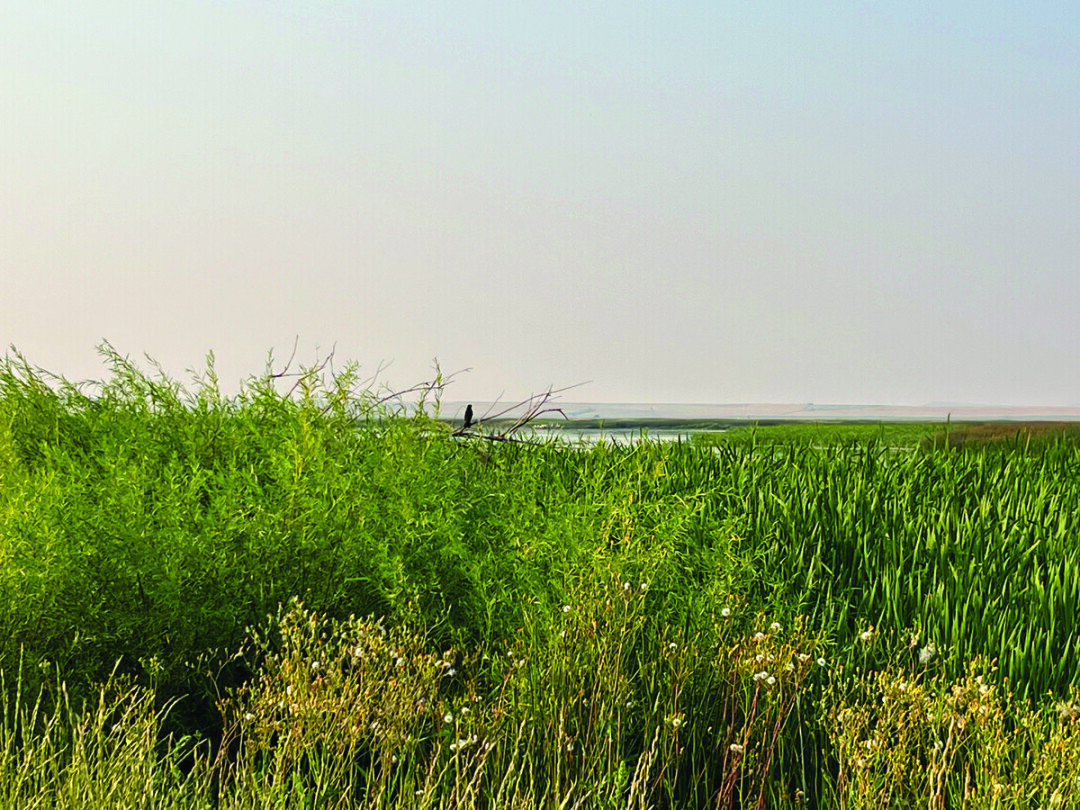
Section 1002 of the Alaska Lands Act also mandated a scientific study to assess the impact of oil drilling in the coastal plain. Updated in 2001, the report found that the snow geese who feed on the plain on their way south from their northernmost grounds of Baffin Island are highly sensitive to aircraft activity. Helicopters scared the snow geese off from more than three miles away and displaced them a mile from their feeding grounds, and a separate Canadian study found that planes displace them further. The day after regular disturbances, half as many geese will return to the area. If this population of snow geese is displaced from the arctic plain, it is unlikely that they will have anywhere else to feed, and their ability to migrate south will be threatened.
The Gwich’in, along with numerous conservation groups such as Alaska Conservation and the Wilderness Society, are in total opposition to drilling. Many of the Inupiat, whose village of Kaktovik is on the edge of the arctic coast amid ice floes, polar bears, and bowhead and beluga whales, support oil extraction and have financial interests in it. Alaska Native company Kaktovik Inupiat Corporation owns 92,000 acres of surface land in 1002, and Arctic Slope Regional Corporation or A.S.R.C, the largest Alaska Native company with an annual revenue of $5.7 billion, has ownership of subsurface mineral rights in the same area.
Contention between tribal groups, resource extraction companies, and political interests on the use of land is also not foreign to Montanans, and what happens in one part of the West can set a precedent for another. Public lands have been a recent focus for conservatives; last year, Utah sued the federal government to transfer BLM land to state ownership, with 14 other states filing amicus briefs, and Republican Senator Mike Lee of Utah led an attempt in Congress to sell off federal public lands. The Montana legislature declined to sign onto the lawsuit, and Montana was excluded from the Senate bill. There is a recognition of the cruciality of protected land in this state.
Conservationist and writer Debbie Miller wrote that the thought of oil rigs and pipelines covering the arctic plain “seems as sacrilegious as driving a motorcycle into the Sistine Chapel.”
Activist Lenny Kohm would often say of drilling on the plain, in complete seriousness, that “the first drill bit will have to go right through my heart.”
Imagine a snowy tundra that takes a week of walking to cross, a week where the sun would dip and rise low above the flat, tussocked plain but never sink under the horizon, or a week of unbroken night, the ground frozen beneath your feet and the stars shining like ice.
You may see the flocks of endless birds falling and flapping between shore and sky, or you might be overcome by the caribou herd—hundreds of thousands of warm mammals snuffling and breathing, their hoof-ligaments clicking, calves bleating and pushing for milk from underneath their mothers’ lanky legs.
Montana, too, has wilderness, and in greater amount we have national forest roadless area, the regulation for which (the “Roadless Rule”) is at the time of this writing under attempt at repeal by Senator Lee via inserting an amendment into pending act S. 140.